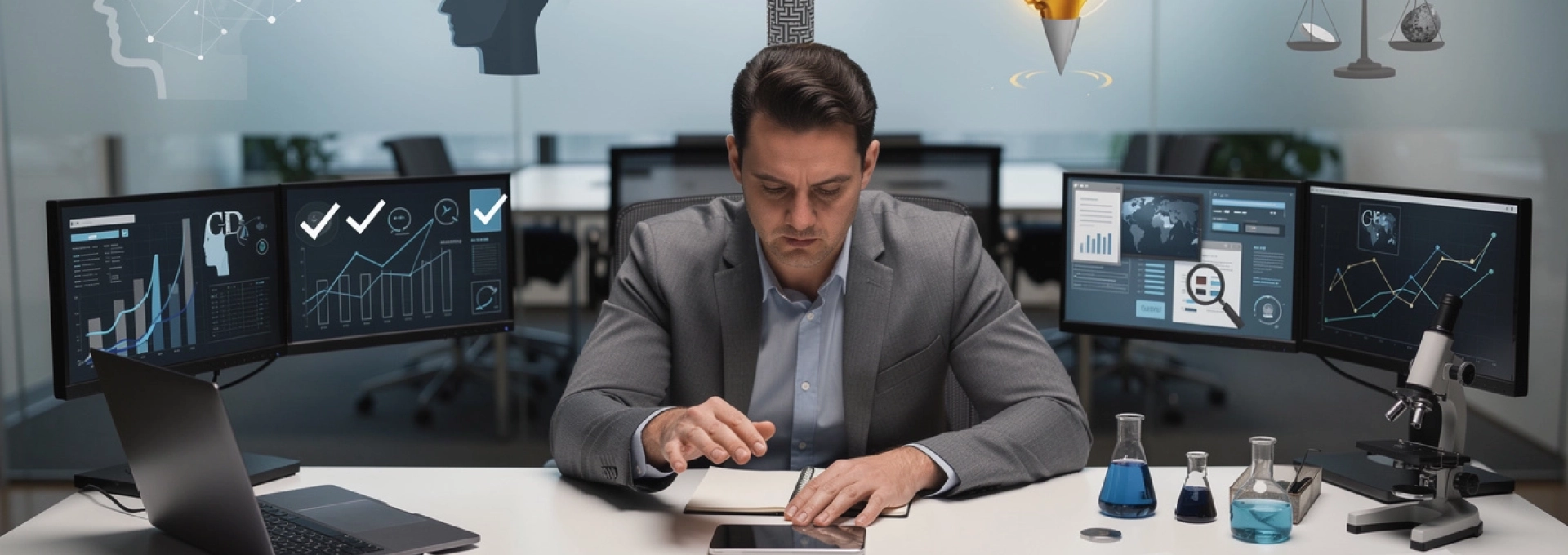
In an era where information doubles approximately every 72 days, decision-makers face a paradoxical challenge: access to unlimited data coexists with widespread uninformed action. Research indicates that despite swimming in what the University of California describes as « a boundless sea of information »—with the average person consuming 34 gigabytes daily—the quality of decision-making hasn’t proportionally improved. This disconnect stems from a fundamental misunderstanding: accumulating information differs vastly from being genuinely informed. Whether you’re navigating corporate strategy, policy development, or personal choices, the imperative to thoroughly understand situations before acting has never been more critical. The consequences of impulsive, poorly-informed decisions ripple through organizations, communities, and individual lives with increasing velocity in our interconnected world.
Cognitive biases that undermine Evidence-Based decision making
Understanding the psychological obstacles that prevent informed action represents the foundation of improving decision-making processes. Human cognition, whilst remarkably sophisticated, contains inherent vulnerabilities that systematically distort how you perceive, process, and act upon information. These cognitive biases operate largely beneath conscious awareness, making them particularly insidious threats to sound judgment.
Confirmation bias and selective information processing
Confirmation bias ranks amongst the most pervasive cognitive distortions affecting decision-makers. This tendency to seek, interpret, and remember information that confirms pre-existing beliefs whilst dismissing contradictory evidence creates echo chambers of thought. Research demonstrates that individuals exposed to balanced information nevertheless gravitate toward data supporting their initial hypotheses. When you approach a decision with predetermined conclusions, your brain unconsciously filters incoming information through this lens. The result? You feel informed whilst remaining fundamentally ignorant of alternative perspectives that might reveal critical flaws in your reasoning. This selective processing explains why intelligent professionals often make catastrophically poor decisions—they’ve convinced themselves they understand situations they’ve never truly examined objectively.
Dunning-kruger effect in knowledge assessment
Perhaps the most troubling cognitive bias affecting informed decision-making is the Dunning-Kruger effect: the tendency for individuals with limited knowledge to dramatically overestimate their competence. A landmark study published in Medical Decision Making examined this phenomenon across healthcare decisions. The research found that patients’ perceptions of being informed bore no statistical relationship to their actual knowledge when tested objectively. Remarkably, those making cancer screening decisions showed an inverse correlation—individuals who felt extremely well-informed actually knew less than those expressing uncertainty. This cognitive blindspot creates dangerous confidence in uninformed decisions, as you cannot recognize gaps in understanding you don’t know exist.
Availability heuristic and recency bias
The availability heuristic causes decision-makers to overweight readily available information, particularly recent or emotionally vivid examples, whilst undervaluing comprehensive statistical evidence. Following high-profile incidents, you might dramatically overestimate the probability of similar events occurring, leading to disproportionate responses. This bias explains why media cycles exert such powerful influence on policy-making and business strategy. When information availability substitutes for actual probability assessment, decisions become reactive rather than strategic. The German National Academy of Sciences Leopoldina identified this as a key obstacle: political decision-makers, pressed by accelerated media cycles, commit prematurely to « seemingly obvious solutions » without thorough analysis.
Anchoring bias in preliminary research
Anchoring bias occurs when initial information—regardless of relevance or accuracy—disproportionately influences subsequent judgments. The first data point you encounter establishes a psychological anchor, subtly constraining how you interpret all following information. In pre-decision research, this means preliminary findings, expert opinions encountered early, or even irrelevant numerical information can skew your entire analytical process. Combating anchoring requires deliberately seeking diverse perspectives before forming initial impressions, yet time pressures and cognitive laziness often prevent this disciplined approach. Understanding that your mind naturally anchors to early information helps you implement countermeasures, such as delaying judgment formation until comprehensive data collection concludes.
Pre-action intelligence gathering methodologies
Systematic intelligence gathering transforms intuitive decision-making into evidence-based practice. Research on evidence-informed policy-making demonstrates that integrating comprehensive evidence improves initiative effectiveness whilst rebuilding
Systematic intelligence gathering transforms intuitive decision-making into evidence-based practice. Research on evidence-informed policy-making demonstrates that integrating comprehensive evidence improves initiative effectiveness whilst rebuilding trust among stakeholders. Yet, as studies in Germany, the UK, and OECD countries consistently show, access to evidence is not enough—decision-makers also need structured methodologies to collect, organise, and interpret that information before acting. By adopting pre-action intelligence frameworks, you move from reactive problem-solving to proactive, strategic decision-making. The following tools offer practical structures you can apply in organisational, policy, and even personal contexts.
SWOT analysis framework for situational assessment
The SWOT analysis—Strengths, Weaknesses, Opportunities, Threats—remains one of the most accessible starting points for structured intelligence gathering. Its value lies not in complexity but in forcing you to examine both internal realities and external conditions before committing to an action. Rather than relying on gut feeling, you systematically map what is working, what is vulnerable, what the environment offers, and where risks lie. Used properly, a SWOT becomes less of a checklist and more of a disciplined lens for being informed before taking action.
To use SWOT analysis as a robust pre-decision tool, you should ground each quadrant in verifiable evidence rather than opinion. Strengths and weaknesses need to be anchored in data such as performance metrics, customer feedback, operational KPIs, or staff surveys. Opportunities and threats should draw on external research: market reports, regulatory forecasts, demographic trends, or technological developments. When a leadership team completes a SWOT together, divergent perceptions often surface, revealing where assumptions—not facts—have been driving previous decisions.
One practical approach is to treat your first SWOT draft as a hypothesis, then spend dedicated time validating or disproving each point with evidence. For example, if you list “strong customer loyalty” as a strength, can you support that with retention rates, net promoter scores, or repeat purchase data? If you identify “market saturation” as a threat, have you checked sector analyses or competitor growth figures? By iterating your SWOT in this way, you transform it from a brainstorming exercise into a dynamic evidence map that guides informed action.
Primary vs secondary research source validation
Effective intelligence gathering depends not only on how much information you collect, but also on the quality and provenance of your sources. Primary research—data you collect directly through surveys, interviews, experiments, or observations—offers first-hand insights but can be time-consuming and prone to design bias. Secondary research—existing reports, academic articles, news coverage, and internal documents—provides speed and breadth, yet often reflects someone else’s framing or agenda. Informed decision-making requires a thoughtful balance of both, underpinned by rigorous source validation.
Before acting on any piece of information, you should ask: who produced this, for what purpose, and using which methods? Primary data needs scrutiny around sampling (who was included or excluded), question wording, and context. A staff survey with a 20% response rate, for instance, may not truly represent organisational sentiment, even if the results look compelling. Secondary sources demand equal care—industry white papers, for example, might be sponsored by vendors with commercial interests, while media articles often simplify complex findings for wider audiences.
A practical tactic is to triangulate key insights using at least one primary and one secondary source wherever possible. If secondary research suggests a growing customer preference for a particular product feature, corroborate this through your own interviews, pilot tests, or A/B experiments. Likewise, when your internal metrics indicate a trend, seek external benchmarks to see whether this pattern reflects broader market dynamics or a unique organisational issue. This dual validation process slows impulsive decisions but significantly raises the probability that your actions rest on reliable, contextually appropriate evidence.
Stakeholder mapping and consultation protocols
Being informed before taking action also requires understanding who is affected by a decision and how their interests, power, and insights intersect. Stakeholder mapping provides a structured way to analyse these dynamics rather than leaving them to intuition or office politics. By systematically identifying stakeholders, assessing their influence, and clarifying their information needs, you reduce the risk of blind spots that can derail implementation later. More importantly, you tap into distributed knowledge that no single decision-maker could access alone.
A common approach is to plot stakeholders on a simple power–interest grid: who has high influence and high interest, high influence but low interest, low influence but high interest, and so on. This visual map helps you decide where to invest time in early consultations, where to provide regular updates, and where light-touch engagement may suffice. For key decisions, formal consultation protocols—structured interviews, focus groups, or advisory panels—can uncover practical constraints, cultural nuances, or unintended consequences that might otherwise remain invisible.
Well-designed consultation does more than collect opinions; it generates richer evidence. For instance, frontline employees often see systemic issues long before senior leadership recognises them, while customers can articulate pain points that quantitative dashboards fail to capture. By integrating stakeholder insights with quantitative data, you gain a more holistic, grounded understanding of the situation. This combination of perspectives strengthens both the legitimacy and the effectiveness of any subsequent action.
Risk assessment matrix development
No matter how promising a course of action appears, informed decision-making demands explicit attention to risk. A risk assessment matrix allows you to evaluate potential threats in a structured way, weighing both the likelihood of each risk and its potential impact. Instead of treating risk as a vague concern or an afterthought, you translate it into a visual map that guides prioritisation and mitigation strategies. This is particularly vital for high-stakes contexts such as public policy, healthcare, large investments, or safety-critical operations.
Typically, a risk matrix uses a grid where one axis represents probability (for example: rare, unlikely, possible, likely, almost certain) and the other represents impact (insignificant through to catastrophic). Each identified risk—data breach, supply chain failure, regulatory change, reputational damage—is plotted on this grid. Those falling in the high-likelihood, high-impact zone demand immediate mitigation plans; those in low-likelihood, low-impact zones may simply be monitored. By making these judgments visible, teams can debate them explicitly rather than relying on unspoken assumptions or individual risk tolerance.
Developing a risk matrix also surfaces where you need more information before acting. If you cannot confidently rate the likelihood of a regulatory shift or the impact of a technology failure, that uncertainty itself becomes a signal to pause and gather further evidence. In this sense, the matrix is not just a defensive tool; it is a decision support mechanism that highlights knowledge gaps. When combined with scenario planning and clear risk owners, it forms a powerful component of a broader due diligence process.
Information verification techniques and fact-checking protocols
In a world where misinformation travels faster than official corrections, being informed before taking action increasingly depends on your ability to verify what you read, hear, and share. Studies on media literacy and digital behaviour show that many people feel well informed while regularly engaging with partial, outdated, or outright false information. For organisations and leaders, acting on such flawed inputs can damage credibility, waste resources, and erode stakeholder trust. Robust information verification and fact-checking protocols are no longer optional—they are essential competencies.
Cross-referencing multiple authoritative sources
One of the most reliable ways to validate information is to cross-reference it across multiple authoritative sources. Rather than trusting a single article, post, or report, you look for convergence—or meaningful divergence—among independent, reputable providers. In practice, this might mean checking an economic claim against government statistics, central bank reports, and peer-reviewed research, rather than accepting a single analyst’s interpretation. When sources with different incentives and perspectives align, your confidence in the information can reasonably increase.
Authoritative sources typically share several characteristics: transparent methodology, clear authorship, institutional accountability, and a track record of correction when errors are found. International organisations, national statistical offices, academic journals, and established professional bodies often meet these criteria. However, authority is contextual—a niche technical blog written by a recognised expert can be more reliable on a specific topic than a generalist news outlet. The key is to understand who is behind the information and how rigorously their claims are supported.
Cross-referencing also helps you detect outliers or sensational claims designed to attract attention rather than convey nuance. If one source reports a dramatic figure that no other credible source supports, this should trigger caution and further investigation. Instead of asking “Is this true?” in a binary way, you begin to ask “How likely is this to be accurate, and under what conditions?” That shift in questioning moves you closer to genuinely informed judgment.
Lateral reading strategies for digital content
Most people consume online information vertically: they stay on a single page, scrolling down, perhaps glancing at the headline, images, and comments. Professional fact-checkers, by contrast, use lateral reading—opening multiple tabs to research the source, author, and claim in parallel. Before investing trust in an article, they leave it briefly to see what other sources say about the outlet, whether the author has relevant expertise, and how the claim is reported elsewhere. Adopting this habit significantly reduces the likelihood of being misled by polished but unreliable content.
In practical terms, lateral reading means that when you encounter a surprising or emotionally charged assertion, you pause and ask: who is telling me this, and what do others say? You might search the organisation’s name plus “about” or “criticism”, look up the author on professional platforms, or check fact-checking websites for related debunks. If the claim involves data, you can search for the original study or dataset rather than relying on secondary summaries. This sideways movement, even for a few minutes, often reveals whether you are dealing with a trustworthy source or with something more questionable.
Lateral reading also applies within organisations themselves. When presented with an internal slide deck or summary memo, you can look sideways to earlier reports, raw data, or parallel departments’ analyses. Does the new narrative align with previous findings, or does it selectively present information to support a pre-decided course of action? By not allowing any single narrative to become your only lens, you maintain a healthier scepticism that supports more accurate, informed decisions.
Identifying misinformation through CRAAP test methodology
For a more systematic evaluation of information quality, many educators and professionals use the CRAAP test—an acronym for Currency, Relevance, Authority, Accuracy, and Purpose. This framework offers a simple but powerful checklist you can apply to any source, from academic papers to social media posts. Rather than relying on gut instinct about whether something “feels right”, you interrogate each dimension explicitly. Over time, this becomes a mental habit that raises the baseline quality of information you act upon.
Currency prompts you to ask how up to date the information is and whether that matters for your decision. A five-year-old article on basic physics may still be valid; a five-year-old piece on technology trends or policy changes likely is not. Relevance concerns whether the information directly addresses your question or context, or whether it is tangential. A highly cited global study may still be a poor guide if your decision involves a very specific local environment or niche population.
Authority and Accuracy focus on who produced the information and how they support their claims. Is the author qualified, and is the work published or endorsed by a reputable institution? Are references provided, data sources cited, and methods described? Finally, Purpose asks why this information exists: to inform, persuade, sell, entertain, or provoke. Recognising a persuasive agenda does not automatically invalidate content, but it should heighten your scrutiny. By walking through these five lenses, you can quickly flag sources that deserve deeper engagement and those that should be treated with caution or discarded.
Expert consultation and peer review processes
Even with robust personal fact-checking, there are limits to what any individual can verify alone. Complex domains—such as epidemiology, climate science, or advanced finance—often require interpretation by subject-matter experts. Consulting recognised experts before acting on specialised information can prevent costly missteps and oversimplifications. However, the key is to seek expertise that is both technically sound and context-aware, rather than relying on the most visible commentator or the person who confirms your existing views.
Formal peer review processes, where independent experts scrutinise methods and conclusions before publication, remain a gold standard in academic and scientific fields. While not infallible, peer-reviewed work generally offers a higher baseline of reliability than unreviewed commentary. In organisational settings, you can mirror this by instituting internal peer review: having colleagues from different departments or disciplines critique major analyses and proposals before decisions are finalised. This structured challenge process exposes assumptions and identifies gaps that may have been invisible to the original authors.
Crucially, expert consultation should not be a one-off box-ticking exercise used to legitimise a decision already made. Instead, it needs to be integrated early enough that expert feedback can genuinely shape your options. Combining expert input with stakeholder perspectives and empirical data creates a more rounded evidence base. When your actions are later scrutinised, you can demonstrate not only that you gathered information, but that you subjected it to rigorous, multi-layered evaluation.
Case studies of uninformed decision-making failures
Abstract principles about being informed before taking action become far more tangible when we examine real-world failures. Across sectors, some of the most infamous corporate and technological missteps share a common thread: key decision-makers acted on partial information, overconfidence, or untested assumptions. They felt informed, or believed their intuition and past success were enough, only to discover—sometimes disastrously—that critical facts had been ignored. The following cases illustrate how overlooking evidence and due diligence can unravel even well-funded, high-profile ventures.
Theranos blood testing technology debacle
Theranos, once valued at around $9 billion, promised to revolutionise healthcare by delivering comprehensive blood tests from a single finger-prick. Investors, partners, and even some regulators accepted these claims with minimal independent verification. Charismatic leadership, an impressive board, and carefully curated demonstrations created a powerful illusion of progress. Yet behind the scenes, the core technology did not work as advertised, and many tests relied on traditional machines rather than the company’s proprietary devices.
The failure of Theranos was not only a technical collapse; it was a breakdown of informed decision-making at multiple levels. Investors often bypassed rigorous technical due diligence, relying instead on social proof and fear of missing out. Corporate partners launched services based on unvalidated performance claims, and oversight bodies were slow to demand transparent, peer-reviewed evidence. Patients ultimately bore the risk, receiving test results that could be inaccurate or misleading, with potentially serious health consequences.
This case underscores the dangers of substituting narrative for evidence. When decision-makers prioritise speed, secrecy, or competitive positioning over verifiable data and expert scrutiny, they dramatically increase the odds of catastrophic failure. A robust insistence on independent validation, transparent methods, and incremental piloting could have exposed the flaws in Theranos’s approach far earlier, saving significant resources and harm.
New coke product launch miscalculation
In the mid-1980s, Coca-Cola made one of the most cited marketing missteps in history: replacing its flagship drink with “New Coke”. The decision followed extensive taste tests suggesting that consumers preferred the new, sweeter formula over both original Coke and Pepsi. On the surface, this looked like evidence-based decision-making—hundreds of thousands of blind tests, clear majority preference, and a bold response to competitive pressure. Yet within months of launch, the company faced intense backlash and was forced to reintroduce “Coca-Cola Classic”.
What went wrong? The research design focused narrowly on taste in controlled settings, ignoring the broader emotional and cultural meaning attached to the original product. Consumers were not just choosing a flavour; they were choosing an identity, a heritage, and a set of associations built over decades. By treating the decision as a simple product optimisation problem, executives failed to gather evidence about brand attachment, symbolic value, and likely public reaction to replacing a beloved icon.
In hindsight, the New Coke episode illustrates how being partially informed can be as dangerous as being uninformed. The company had data—but on the wrong question. More holistic intelligence gathering, including qualitative research on brand perception and scenario testing of potential public responses, might have revealed the risks of removing the original formula. Instead, a seemingly rational, data-driven change triggered an emotional backlash that the initial research had never attempted to measure.
Blockbuster’s rejection of netflix partnership
At the turn of the millennium, Blockbuster was the dominant force in video rentals, with thousands of physical stores worldwide. When a then-small company called Netflix proposed a partnership to handle Blockbuster’s online operations, the offer was reportedly dismissed. Executives believed their existing business model, brand recognition, and retail footprint were sufficient to fend off emerging digital competitors. Less than a decade later, Blockbuster filed for bankruptcy, while Netflix evolved into a global streaming giant.
The decision to reject collaboration was shaped by several information failures. Blockbuster underestimated the speed at which consumer preferences would shift toward convenience and on-demand access, and overestimated the resilience of late-fee-driven revenue. Internal data, focused largely on store performance and short-term profitability, failed to capture nascent but powerful trends in broadband penetration, device usage, and user expectations. Leaders anchored on past success instead of actively seeking external evidence that could challenge their assumptions.
Had Blockbuster systematically analysed market signals, customer behaviour data, and technological trajectories, it might have adopted a hybrid strategy or experimented more seriously with digital offerings. Instead, acting on an incomplete understanding of the evolving landscape, it doubled down on a declining model. The opportunity cost of that uninformed decision is now a standard case study in strategic myopia and the perils of ignoring disruptive evidence.
Digital tools for pre-decision research and analysis
While the volume of available information can feel overwhelming, it also offers unprecedented opportunities for more informed decision-making—if you know how to harness the right tools. Digital platforms now enable rapid access to academic research, open-source intelligence, real-time sentiment, and advanced visualisation. Rather than substituting human judgment, these tools augment it, helping you see patterns, test hypotheses, and stress-test assumptions before committing to action. The challenge is not just which tools to use, but how to integrate them thoughtfully into your decision processes.
Google scholar and academic database navigation
For many decisions, especially those involving health, education, policy, or complex organisational change, peer-reviewed research provides a critical foundation. Platforms like Google Scholar, PubMed, and specialised academic databases allow you to search across thousands of journals and publications in seconds. However, skimming titles or abstracts is not enough; you need strategies for identifying high-quality, relevant studies and interpreting them correctly. Otherwise, you risk cherry-picking research that fits your expectations while ignoring the broader evidence base.
Effective navigation begins with refining your search terms, using combinations of keywords and filters (such as publication date, field, or article type). Once you identify promising papers, pay attention to where they are published, how often they are cited, and whether they are systematic reviews or single studies. Systematic reviews and meta-analyses, which synthesise multiple studies, often provide more robust guidance than isolated findings. Reading the methods and limitations sections, even at a high level, helps you judge how confidently you can apply the results to your own context.
For non-specialists, one practical approach is to use academic research to inform questions rather than to dictate answers. Instead of asking “What should we do?” you might ask “What factors tend to influence outcomes like this, according to the literature?” or “What have similar organisations tried, and with what results?” This shifts you from anecdote-driven decision-making to evidence-informed inquiry, without pretending that research can mechanically solve every real-world problem.
OSINT frameworks for open-source intelligence
Open-source intelligence (OSINT) refers to information gathered from publicly available sources—websites, social media, government databases, news reports, and more. Originally developed for security and geopolitical analysis, OSINT frameworks are now widely used in due diligence, market research, and risk assessment. They provide structured ways to scan the environment, monitor emerging issues, and validate or challenge internal assumptions. When used ethically and legally, OSINT can dramatically enhance situational awareness before you act.
Common OSINT practices include monitoring official registers and filings, tracking competitor announcements, analysing job postings for signals of strategic shifts, and mapping online communities relevant to your sector. Frameworks such as the Intelligence Cycle—direction, collection, processing, analysis, dissemination—help you avoid ad hoc browsing and instead conduct purposeful, repeatable research. Rather than relying on a single website or platform, you systematically traverse multiple sources to build a more complete picture.
However, the ease of access to open data can create an illusion of completeness. OSINT findings must still be evaluated for credibility, representativeness, and bias, using techniques such as lateral reading and cross-referencing. When combined with internal data and expert judgment, open-source intelligence becomes a powerful complement to traditional research, giving you real-time context that static reports often lack.
Data visualisation platforms for pattern recognition
Raw data tables rarely speak for themselves; patterns, anomalies, and trends often remain hidden until visualised. Modern data visualisation platforms—ranging from enterprise tools like Tableau and Power BI to open-source libraries and simple dashboards—allow you to transform complex datasets into intuitive graphs, maps, and interactive reports. This visual layer helps you see relationships that might otherwise go unnoticed, such as correlations between variables, geographic clusters, or shifts over time.
For decision-makers, visualisation serves as both an analytical and a communication tool. Analytically, it enables you to test hypotheses quickly—“Does customer churn spike after particular events?” or “Are certain regions consistently underperforming?”—without needing to write complex code. Communicatively, it allows you to present evidence to stakeholders in a way that is easier to grasp and discuss, supporting more informed collective decisions. A well-designed chart can convey insights at a glance that would take pages of prose to explain.
Yet visualisation is not neutral. Choices about scales, colours, and chart types can subtly influence interpretation, sometimes exaggerating or downplaying differences. Being truly informed requires you to question not only the underlying data but also the way it is presented. Whenever possible, interact with the data yourself—filtering, zooming, and comparing alternative views—rather than accepting a single pre-packaged graphic as definitive.
Ai-powered sentiment analysis tools
Artificial intelligence has made it possible to process vast volumes of text—social media posts, reviews, survey comments, news articles—and extract patterns of sentiment and topic. For organisations, AI-powered sentiment analysis tools offer real-time insight into how customers, employees, or the public feel about key issues. Instead of relying on anecdotal feedback or occasional surveys, you can track evolving attitudes and detect emerging concerns before they escalate. This can be particularly valuable when preparing to launch a product, implement a policy, or navigate a sensitive change.
These tools typically assign positive, negative, or neutral scores to text and can categorise comments by theme. However, they are not infallible: sarcasm, cultural nuance, and domain-specific language can mislead algorithms. As a result, sentiment data should be treated as an early warning system or a directional indicator, not as a precise measure of human emotion. Combining automated analysis with human review—especially for high-impact decisions—helps correct misclassifications and provide richer context.
Used wisely, sentiment analysis can complement more traditional research methods. For example, if surveys suggest high employee engagement but social media forums reveal frustration about specific issues, that discrepancy signals a need for deeper investigation. In this way, AI does not replace critical thinking; it amplifies your ability to notice where your understanding may be incomplete and where further, more qualitative inquiry is required before acting.
Implementing a structured due diligence process
Bringing all these elements together—awareness of cognitive biases, disciplined intelligence gathering, rigorous verification, and smart use of digital tools—ultimately points toward one central capability: a structured due diligence process. Rather than relying on ad hoc research or last-minute checks, you embed a repeatable sequence of steps into your decision-making. This structure does not eliminate uncertainty, but it ensures that when you act, you do so with a clear view of what is known, what is assumed, and what remains uncertain.
A practical due diligence process often includes several core stages. First, you define the decision clearly: what exactly is at stake, what options are available, and what criteria will guide your choice? Next, you scope information needs—identifying which data, perspectives, and expert inputs are necessary to evaluate those options. You then collect and verify information using the methods outlined earlier: SWOT, stakeholder consultations, risk matrices, academic research, OSINT, and so forth. Crucially, you document sources and assumptions, creating an audit trail that can later be reviewed and improved.
Once information is assembled, you move into structured analysis: comparing options against your criteria, conducting scenario planning, and explicitly considering risks and unintended consequences. This is where you actively check for cognitive biases—asking, for example, “Are we anchoring on initial figures?” or “Have we sought disconfirming evidence?” Final decisions are then recorded along with the reasoning behind them, enabling post-decision reviews. Over time, these reviews help you learn which information and methods truly improved outcomes and where your process needs refinement.
Implementing such a process does require time and discipline, which can feel challenging in fast-paced environments. Yet the cost of skipping due diligence often far exceeds the time saved—through failed projects, reputational damage, or missed opportunities. By normalising the expectation that significant actions are preceded by structured, transparent inquiry, you build a culture where being informed is not a luxury but a standard. In that culture, decisions become less about who argues most persuasively and more about what the best available evidence actually supports.