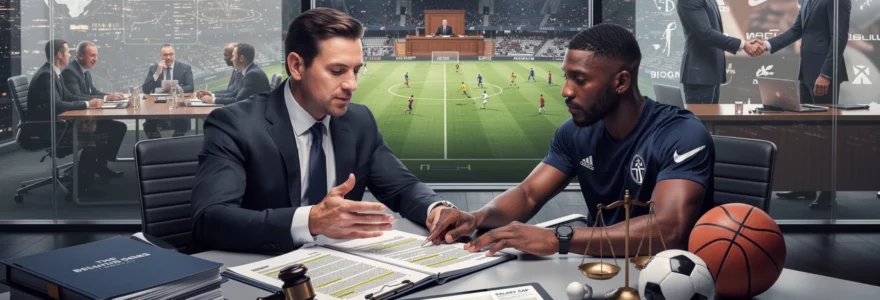
Professional athletics represents one of the most financially lucrative yet legally complex industries in the modern world. Behind every multi-million pound transfer, every sponsorship deal with global brands, and every disciplinary tribunal hearing sits a sophisticated legal framework that governs the rights, obligations, and commercial interests of athletes, clubs, and sporting bodies. The specialist legal professionals who navigate this intricate landscape—sports lawyers—serve as architects of athletic careers, strategic advisors on regulatory compliance, and fierce defenders of professional reputations. Their expertise spans employment contracts worth tens of millions annually, intellectual property disputes over personal brands, anti-doping proceedings with career-ending implications, and international transfer regulations that facilitate player mobility across borders. As the sports industry continues its exponential growth, generating revenues exceeding £400 billion globally, the strategic role of legal counsel has become indispensable to protecting both competitive integrity and commercial value within professional sport.
Contract negotiation and salary arbitration in professional sport
The foundation of any professional athlete’s career rests upon the employment contract that governs their relationship with their club or franchise. Sports lawyers specialising in contract law bring sophisticated negotiation skills to secure terms that protect their clients’ financial interests whilst maintaining flexibility for career progression. Unlike standard employment agreements, athletic contracts incorporate performance-based compensation structures, image rights arrangements, release clauses, and termination provisions that reflect the unique nature of professional sport. A Premier League footballer’s contract, for instance, might include base salary, appearance bonuses, goal incentives, Champions League qualification payments, and sell-on percentage agreements—each requiring meticulous drafting to avoid ambiguity.
Collective bargaining agreements and salary cap compliance
In North American professional sports leagues and increasingly within European football, collective bargaining agreements establish the framework within which individual contracts must operate. These agreements, negotiated between players’ unions and league management, set minimum salaries, benefit provisions, and critically, salary cap limitations that restrict total team payroll. Sports lawyers must structure contracts that maximise player compensation whilst ensuring clubs remain compliant with Financial Fair Play regulations or league-specific salary caps. The NBA’s soft cap system, for example, permits teams to exceed the threshold through specific exceptions, creating opportunities for creative contract structuring. Legal advisors who understand these mechanisms can secure additional compensation for their clients through trade kickers, player options, and deferred payment arrangements that optimise both immediate earnings and long-term financial security.
Performance bonuses and incentive clause structuring
Modern athletic contracts increasingly incorporate performance-based compensation that aligns player incentives with team success. Sports lawyers draft incentive clauses that establish clear, measurable objectives—appearances made, goals scored, assists provided, clean sheets maintained, or championships won. The legal precision required in defining these metrics cannot be overstated; ambiguous language leads to disputes that damage player-club relationships and potentially result in costly arbitration. A well-structured bonus provision might include tiered payments: £50,000 for ten league goals, £100,000 for twenty, and £200,000 for thirty, with additional payments for Golden Boot achievements or Player of the Season honours. Legal counsel must also negotiate the accounting treatment of these bonuses, determining whether they count against salary cap restrictions or qualify as separate performance payments under league regulations.
Endorsement deal negotiations with nike, adidas, and major brands
For elite athletes, endorsement income frequently surpasses salary earnings, with global brands like Nike, Adidas, and Puma competing to associate their products with sporting success. Sports lawyers negotiate these commercial agreements, which can span decades and generate hundreds of millions in guaranteed payments plus performance royalties. The 2016 lifetime deal between Nike and LeBron James, reportedly worth over $1 billion, exemplifies the scale of modern endorsement arrangements. Legal advisors must address exclusivity provisions, ensuring that endorsement obligations don’t conflict with team sponsorships; performance requirements, including appearance commitments and social media promotion; moral clauses that permit brand termination for reputational damage; and product development royalties that provide ongoing revenue from signature merchandise lines. These negotiations require understanding both contract law and brand management strategies.
Agent commission structures and representation agreements
The relationship between athlete and agent represents a critical legal arrangement that shapes career trajectory and financial outcomes. FIFA regulations cap agent commissions at ten percent of the player
’s basic wage in a given season, but the underlying representation agreement between athlete and intermediary can be far more nuanced. Sports lawyers draft and review these agreements to ensure commission structures are transparent, compliant with federation rules, and aligned with the athlete’s long-term interests. This might involve capping commissions on certain revenue streams, prohibiting conflicts of interest where agents act for both club and player, and setting out clear grounds for termination if the relationship breaks down. They will also address jurisdiction, dispute resolution mechanisms, and audit rights so that athletes can verify that commissions have been calculated correctly. Without robust legal input, young athletes in particular are vulnerable to signing away disproportionate percentages of future earnings in exchange for short-term opportunities.
Franchise tag and restricted free agency disputes
In leagues such as the NFL and NHL, the mechanisms of franchise tags and restricted free agency can dramatically affect an athlete’s earning potential and career mobility. Clubs may use these tools to retain star players below true market value, leading to high-stakes disputes that hinge on technical interpretations of collective bargaining agreements. Sports lawyers representing athletes will challenge improper tag designations, argue for market-consistent valuations in arbitration, and scrutinise whether procedural timelines have been followed correctly. On the club side, legal teams work to ensure that tags and qualifying offers are implemented in a way that protects roster continuity without breaching league rules or exposing the organisation to grievance claims. The result is a sophisticated blend of employment law, collective bargaining interpretation, and strategic negotiation, where a single arbitration decision can shift tens of millions of dollars of value.
Intellectual property rights and image exploitation in athletics
Beyond salaries and bonuses, modern athletic careers are increasingly defined by the control and monetisation of intellectual property. A player’s name, image, signature celebration, and even social media handle can be worth substantial sums when properly protected. Sports lawyers specialising in intellectual property ensure that athletes retain control over these assets and license them on terms that maximise long-term value. This work spans trademark registration, endorsement and licensing agreements, brand protection actions against counterfeiters, and negotiations with clubs and leagues over collective image rights. In effect, the sports lawyer becomes part brand manager, part litigator, tasked with turning sporting reputation into a sustainable commercial platform.
Name, image, and likeness rights under NCAA regulations
The introduction of name, image, and likeness (NIL) rights for college athletes in the United States has transformed the legal landscape for amateur sport. Under updated NCAA regulations and state-level NIL statutes, student-athletes can now sign sponsorship deals, monetise their social media channels, and participate in commercial campaigns without losing eligibility. Sports lawyers help these young athletes navigate a complex web of rules that restrict certain categories of endorsements, mandate disclosure to universities, and sometimes limit the use of school marks. They also vet NIL contracts to avoid exploitative terms, such as perpetual rights or excessive commission obligations. For families unfamiliar with commercial law, having legal counsel is akin to having a translator in a foreign country – essential to understanding what is being signed away and on what terms.
Trademark registration for personal brands and logos
As athletes build personal brands, trademark protection becomes a cornerstone of their commercial strategy. A distinctive logo, nickname, or slogan can be registered as a trademark, preventing unauthorised third parties from selling merchandise or running marketing campaigns that trade on the athlete’s reputation. Sports lawyers conduct clearance searches to ensure proposed marks do not infringe existing rights, file applications in key jurisdictions, and develop a registration strategy tailored to the athlete’s likely markets. They also advise on ownership structures: should the trademark sit with the individual, or with a personal holding company for tax and estate planning purposes? When infringements arise—such as counterfeit shirts or unauthorised fan accounts selling branded products—legal teams issue cease-and-desist letters and, where necessary, pursue civil actions to enforce rights and recover damages.
Licensing agreements for video games and trading cards
Licensing of athlete images for use in video games, trading cards, and fantasy sports platforms has become a multi-billion pound segment of the sports economy. Typically, these rights are negotiated either collectively through players’ associations or individually for high-profile stars who command premium royalties. Sports lawyers structure these licensing agreements to define the precise scope of authorised use, royalty rates, audit rights, and territorial limits. For example, a footballer might grant rights for inclusion in a global video game franchise, but reserve separate rights for mobile games or NFTs. Legal counsel must also address emerging technologies: how should virtual reality, metaverse appearances, or AI-generated likenesses be handled? Clear drafting avoids future disputes as new forms of digital exploitation emerge over the life of a long-term licence.
Social media content ownership and monetisation rights
In an era where an athlete’s Instagram or TikTok following can exceed that of their club, social media has become a primary vehicle for brand building and revenue generation. Yet who owns the content produced—especially when it is created in team facilities, wearing club-branded kit, or as part of league campaigns? Sports lawyers help to delineate ownership and usage rights between athlete, club, league, and sponsors, ensuring that commercial value is not unintentionally surrendered. They also review influencer-style agreements that govern sponsored posts, affiliate links, and platform-specific campaigns, addressing advertising standards compliance and disclosure obligations. For the athlete, robust legal advice can be the difference between social media being a side hobby and it becoming a protected, scalable business asset.
Sports-related litigation and dispute resolution mechanisms
Despite best efforts to anticipate issues in contracts and regulations, disputes are inevitable in professional sport. When conflicts arise—over transfers, terminations, disciplinary sanctions, or injuries—sports lawyers step into a more adversarial role, representing clients in courts, arbitral tribunals, and internal disciplinary bodies. The sports industry has developed its own ecosystem of dispute resolution mechanisms, including specialist tribunals and mandatory arbitration clauses designed to keep matters out of public courts. For athletes and clubs alike, choosing the right forum and strategy can be as important as the underlying legal arguments. Do you fight a ban at the Court of Arbitration for Sport, or seek a negotiated settlement that preserves relationships?
Court of arbitration for sport proceedings and jurisdiction
The Court of Arbitration for Sport (CAS), headquartered in Lausanne, serves as the supreme court of world sport. Its jurisdiction covers appeals from international federations, disputes related to Olympic participation, and many high-profile doping and transfer cases. Sports lawyers appearing before CAS must master both the procedural rules of the tribunal and the substantive regulations of the relevant sport, often under intense media scrutiny. Proceedings are typically confidential, but decisions can set influential precedents within “lex sportiva”—the body of sports law jurisprudence. Lawyers advise clients on whether CAS jurisdiction applies, help draft statements of appeal, and prepare witness and expert evidence on issues ranging from biomechanics to financial fair play. The compressed timelines common in CAS cases, particularly before major tournaments, demand meticulous preparation and the ability to work under severe time pressure.
Anti-doping violations under WADA code enforcement
Anti-doping offences can end careers, strip athletes of medals, and tarnish reputations permanently. The World Anti-Doping Code, implemented through national anti-doping organisations and international federations, operates on a strict liability basis: athletes are responsible for substances in their bodies, regardless of intent. Sports lawyers defending such cases scrutinise every stage of the testing and results management process—sample collection, chain of custody, laboratory analysis, and notification procedures—to identify procedural errors or mitigating factors. They also advise on therapeutic use exemptions, contamination defences, and proportionality of sanctions. A well-prepared legal defence can mean the difference between a four-year ban and a reprimand, or between retrospective disqualification and the preservation of a title. Given the scientific complexity, these cases often involve multidisciplinary teams of lawyers, medical experts, and sports scientists.
Contract breach claims and wrongful termination actions
Disputes over contract termination are a recurring feature of professional sport, whether arising from alleged misconduct, underperformance, or financial distress at the club. Athletes may claim wrongful termination where clubs seek to terminate “for cause” without sufficient grounds, while clubs may sue for breach where players refuse to train, unilaterally walk away, or sign with rival teams in violation of transfer rules. Sports lawyers analyse clauses relating to just cause, notice periods, cure provisions, and liquidated damages to determine each side’s rights and remedies. In football, for example, proceedings may be brought before FIFA’s Dispute Resolution Chamber or national arbitration bodies rather than ordinary courts. Strategic considerations include not only the legal merits but also the impact on public image, future employability, and ongoing relationships within a relatively small industry.
Tort claims for career-ending injuries and medical malpractice
While physical risk is inherent in sport, not all injuries are legally acceptable. When negligent tackles, unsafe facilities, or substandard medical care cause career-ending harm, athletes may bring tort claims to recover lost earnings and compensation for pain and suffering. Sports lawyers assess whether conduct falls outside the normal risks consented to within the sport—a malicious “off-the-ball” challenge, for example, may be actionable even where robust physical contact is expected. They also handle medical malpractice claims against team doctors or surgeons whose errors exacerbate injuries or curtail careers. Quantifying damages requires sophisticated actuarial evidence, projecting the likely trajectory of an athlete’s career and sponsorship income had the injury not occurred. These cases highlight the dual role of sports lawyers as both litigators and advocates for player welfare.
Transfer regulations and international athlete mobility
Globalisation has turned the labour market for elite athletes into a complex web of international transfers, loans, and short-term contracts. Moving between clubs in different countries involves far more than agreeing a transfer fee; it triggers a cascade of regulatory, immigration, tax, and contractual issues. Sports lawyers act as project managers for these moves, coordinating with clubs, agents, immigration specialists, and governing bodies to ensure compliance at every stage. A misstep can result in transfer bans, ineligibility to play, or even deportation. For athletes, especially those moving at a young age, this legal scaffolding is what turns a promising opportunity abroad into a secure and lawful career step.
FIFA transfer matching system and registration procedures
In professional football, the FIFA Transfer Matching System (TMS) underpins all international transfers, providing a digital platform through which clubs must input contract details, transfer fees, and supporting documentation. Sports lawyers advise clubs and intermediaries on accurate data entry, documentary requirements, and deadlines to ensure that transfers are approved before the closure of registration windows. They also help navigate issues such as solidarity contributions and training compensation owed to previous clubs, which can materially affect the net cost of a transfer. Where disputes arise—over unpaid instalments, contested sell-on clauses, or alleged breaches of TMS regulations—legal counsel may represent parties before FIFA’s Players’ Status Committee or the CAS. In this sense, understanding the TMS procedures is as critical as understanding the on-field tactics that prompted the transfer in the first place.
Work permit applications for foreign athletes in UK sport
Post-Brexit, securing a work permit for foreign athletes in UK sport has become a specialised and high-stakes process. Governing bodies such as The Football Association apply objective criteria based on international appearances, league quality, and transfer fees to determine eligibility for a Governing Body Endorsement, which is a prerequisite for a visa. Sports immigration lawyers assess whether players meet the automatic thresholds, prepare appeals based on an Exceptions Panel where they do not, and advise clubs on recruitment strategies that minimise immigration risk. Timelines are tight; a delayed endorsement or visa can mean missing crucial matches or even an entire season. For athletes and clubs alike, expert legal guidance can be the deciding factor between a seamless transfer and a collapsed deal.
Third-party ownership restrictions and TPO compliance
Third-party ownership (TPO) of players’ economic rights—once common in certain football markets—has been heavily restricted by FIFA and many national associations due to concerns over integrity and player welfare. Under current rules, clubs and players are generally prohibited from entering into agreements that allow external investors to influence transfer decisions or share in future transfer fees. Sports lawyers review investment structures, loan agreements, and commercial partnerships to ensure that they do not amount to prohibited TPO or third-party influence. Where historic arrangements exist, they work on unwinding or restructuring them in a compliant manner, often through buyouts or settlement agreements. Failure to observe these restrictions can lead to substantial fines, transfer bans, and reputational damage, making proactive legal compliance essential.
Buy-out clauses and release fee negotiations
Buy-out clauses and release fees act as safety valves in long-term contracts, setting predefined prices at which players can exit or at which clubs must negotiate. In some jurisdictions, such as Spain, certain types of release clauses are mandatory, while in others they are purely contractual devices. Sports lawyers draft these provisions with an eye to future market conditions, balancing a player’s desire for mobility with a club’s need for security. Too low a clause may invite unwanted bids; too high a figure can effectively trap the player. Negotiations can also cover triggering mechanics—must the clause be paid in one lump sum, who pays associated taxes, and does the clause apply only to certain clubs or leagues? When disputes arise over whether a clause has been validly activated, they often end up before specialist tribunals or civil courts, underscoring the importance of precise drafting at the outset.
Regulatory compliance and disciplinary proceedings
Sport operates under a dense network of rules issued by leagues, national associations, and international federations. From on-field conduct to off-field betting, from media obligations to social responsibility standards, athletes and clubs are subject to constant regulatory scrutiny. Sports lawyers play a preventive and defensive role: they help clients understand and comply with codes of conduct, and they represent them when alleged breaches lead to disciplinary action. Much like referees enforcing the laws of the game, disciplinary panels have significant powers—imposing fines, suspensions, and even points deductions—so the stakes can be extremely high.
FA misconduct charges and disciplinary panel hearings
In English football, The Football Association (FA) can bring misconduct charges for a wide range of behaviours, from violent conduct and discriminatory language to comments that question referee integrity. When players or managers are charged, sports lawyers review match footage, referee reports, and social media evidence to build a factual narrative that supports mitigation or acquittal. They draft written submissions, prepare witnesses, and present oral advocacy before commissions composed of former players, officials, and legal professionals. Strategic decisions—such as whether to accept a standard penalty or contest the charge—must weigh the prospects of success against the risk of an increased sanction. For clubs, consistent legal representation in these hearings can also help identify systemic issues, such as repeated breaches of touchline conduct rules, that may require internal policy changes.
Match-fixing investigations and betting integrity violations
Match-fixing and betting integrity breaches strike at the heart of sport’s credibility. Allegations can involve anything from suspicious yellow cards to orchestrated losses, often detected through sophisticated betting pattern analysis by integrity units. Sports lawyers representing accused athletes or officials engage with investigative bodies, respond to information requests, and challenge the admissibility and reliability of betting data or witness testimony. They may also advise on parallel criminal investigations, as some jurisdictions treat serious fixing as a criminal offence. For governing bodies and leagues, legal teams help design and enforce integrity policies, mandatory education programmes, and reporting mechanisms. In a world where a single fixed event can ripple through global betting markets, robust legal frameworks act as a defensive wall protecting public trust.
Social media policy breaches and club code of conduct
What happens when a late-night tweet or Instagram story breaches club policy or league rules? Social media missteps can trigger disciplinary action for bringing the game into disrepute, breaching confidentiality, or violating sponsorship obligations. Sports lawyers assist clubs in drafting clear social media policies that balance freedom of expression with legitimate commercial and reputational interests. When breaches occur, they advise on proportionate disciplinary responses, ensuring that sanctions align with employment law and any collective agreements. On the athlete side, lawyers may argue that disciplinary measures are excessive or inconsistent with past practice, or that policies were unclear or inadequately communicated. As online platforms evolve, this area of sports law resembles a moving target, requiring constant review and adaptation.
Career transition planning and post-retirement legal protections
The legal needs of athletes do not end when the final whistle blows on their playing careers. Retirement—whether planned or sudden due to injury—raises complex questions about pensions, deferred compensation, intellectual property, and future employment. Sports lawyers who take a long-term view help athletes plan for this transition years in advance, structuring contracts and business ventures to provide stability beyond their peak performance window. They also help manage the shift from employee or contractor to entrepreneur, coach, or media personality, each of which carries its own legal risks and opportunities.
Pension scheme entitlements and deferred compensation claims
Many professional leagues operate pension schemes or long-term savings plans designed to support athletes after retirement. Understanding entitlements, vesting periods, and portability between clubs and countries can be challenging, particularly where athletes have moved frequently during their careers. Sports lawyers review scheme rules, cross-check employer and league contributions, and pursue claims where payments have been underfunded or misallocated. They also advise on deferred compensation arrangements—such as loyalty bonuses or back-loaded salaries—that are payable after a contract ends. In cases of club insolvency, legal counsel may help athletes assert preferential claims or access compensation funds established by leagues or unions. The overarching goal is to ensure that the financial rewards earned on the field translate into genuine long-term security.
Non-compete clauses in coaching and management contracts
For retiring athletes moving into coaching, management, or broadcasting, employment contracts often contain restrictive covenants designed to protect the employer’s legitimate interests. These may limit the ability to join rival clubs, work within certain leagues, or approach former colleagues and clients for a specified period. Sports lawyers scrutinise non-compete and non-solicitation clauses for reasonableness in scope, duration, and geography, advising clients on their enforceability under local law. Where necessary, they negotiate carve-outs—for example, allowing a coach to accept national team roles, or to work in a different division or country. When disputes arise, courts or arbitral tribunals may be asked to strike down or modify overly broad restrictions, balancing the individual’s right to earn a living against the club’s need to protect confidential information and strategic know-how.
Insurance coverage for loss of earnings and disability benefits
Given the ever-present risk of injury or illness, insurance plays a critical role in safeguarding athletes’ future earnings. Policies may cover permanent total disablement, temporary loss of income, or even specific body parts whose impairment would undermine performance. Sports lawyers assist in selecting and structuring these policies, ensuring that coverage aligns with contract values, endorsement income, and realistic risk scenarios. When insurers dispute claims—arguing, for example, that a condition was pre-existing, or that medical evidence is insufficient—legal counsel steps in to interpret policy wording, gather expert opinions, and pursue litigation or arbitration where necessary. By integrating insurance planning into overall career strategy, sports lawyers help ensure that a single mis-timed tackle or freak accident does not wipe out years of hard-earned financial progress.