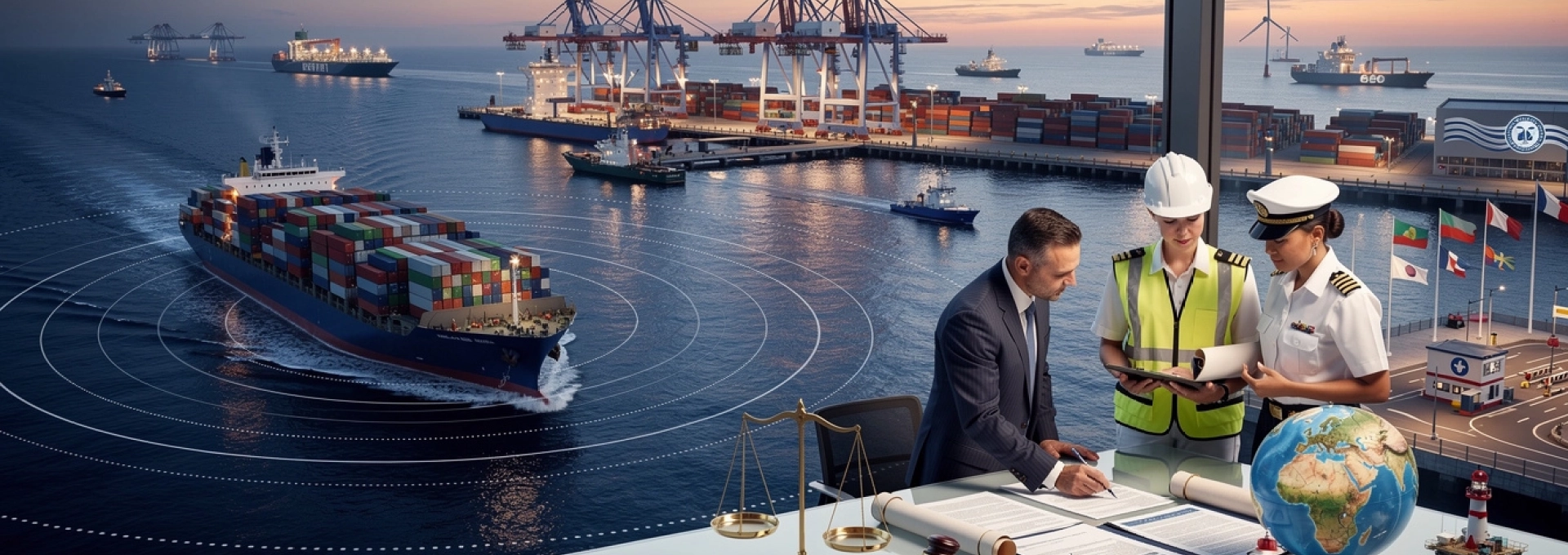
Maritime law serves as the invisible backbone of international commerce, governing approximately 90% of global trade that moves across the world’s oceans. This complex legal framework encompasses everything from vessel safety standards to environmental protection measures, fundamentally shaping how goods flow between nations. The intricate relationship between maritime regulations and international trade creates a delicate balance between facilitating commerce and ensuring safety, security, and environmental protection. Understanding these legal mechanisms becomes crucial as global supply chains grow increasingly complex and interdependent, with maritime disputes capable of disrupting billions of dollars in trade within hours.
United nations convention on the law of the sea (UNCLOS) framework for international commerce
The United Nations Convention on the Law of the Sea stands as the most comprehensive international agreement governing maritime activities, often referred to as the « constitution of the oceans. » This landmark treaty, which entered into force in 1994, establishes the legal framework within which all ocean activities must be conducted, directly impacting global trade operations. UNCLOS creates a unified system that balances the rights of coastal states with the freedom of navigation essential for international commerce.
The convention’s impact on global trade cannot be overstated, as it provides legal certainty for shipping operations while establishing clear boundaries for state jurisdiction. Maritime commerce depends heavily on predictable legal frameworks, and UNCLOS delivers this predictability by defining precise limits for various maritime zones. The treaty’s provisions affect everything from port access rights to deep-sea mining operations, creating a stable environment for long-term investment in maritime infrastructure and shipping operations.
Territorial waters and exclusive economic zones impact on shipping routes
Territorial waters, extending up to 12 nautical miles from a coastal state’s baseline, represent areas where the coastal state exercises sovereignty similar to its land territory, albeit with important limitations for international navigation. Within these waters, coastal states can regulate fishing, resource extraction, and environmental protection, but must allow innocent passage for foreign vessels engaged in continuous and expeditious transit. This balance between sovereignty and navigation rights creates a complex regulatory environment that shipping companies must navigate carefully.
Exclusive Economic Zones (EEZs) extend up to 200 nautical miles from the baseline, covering approximately 36% of the world’s ocean surface. Within these zones, coastal states have sovereign rights over natural resources while maintaining freedom of navigation for international shipping. The establishment of EEZs has significantly impacted shipping routes, particularly for vessels engaged in fishing or resource exploration activities. Major shipping lanes often pass through multiple EEZs, requiring vessels to comply with varying national regulations while maintaining their right to free passage.
Freedom of navigation principles under UNCLOS article 87
Article 87 of UNCLOS establishes fundamental freedoms of the high seas, including freedom of navigation, overflight, and the laying of submarine cables and pipelines. These freedoms form the cornerstone of international maritime commerce, ensuring that no state can claim sovereignty over the high seas beyond its designated maritime zones. The principle of freedom of navigation enables vessels of all flags to traverse international waters without discrimination, supporting the global nature of maritime trade.
However, this freedom comes with responsibilities, including the obligation to comply with international regulations on safety, environmental protection, and security. Ships exercising navigation rights must adhere to IMO conventions, respect the marine environment, and avoid activities that could endanger other vessels or marine resources. The balance between freedom and responsibility creates a framework where commercial interests align with broader international objectives for safe and sustainable maritime operations.
Coastal state jurisdiction over port entry and cargo inspection
Coastal states maintain significant authority over vessels entering their ports, including the right to inspect cargo, verify documentation, and ensure compliance with national and international regulations. This jurisdiction extends beyond mere customs control to encompass safety inspections, environmental compliance checks, and security screenings. Port state control measures have become increasingly sophisticated, with inspectors using risk-based approaches to target vessels that pose the highest safety or environmental risks.
The exercise of port state jurisdiction can significantly impact trade flows, particularly when inspections result in vessel detentions or cargo delays. Modern port state control regimes, such as those operated under regional memoranda of understanding, coordinate inspection activities to avoid duplication while maintaining effective oversight. These systems demonstrate how coastal state sovereignty can be exercised in ways that support rather than impede international trade, provided there is proper coordination and adherence to international
principles. For traders and ship operators, understanding how coastal state jurisdiction works in practice helps anticipate compliance checks, plan realistic port turnaround times, and reduce the risk of costly delays or detentions.
Continental shelf rights and offshore resource extraction regulations
Beyond the Exclusive Economic Zone, UNCLOS grants coastal states sovereign rights over their continental shelf for the purposes of exploring and exploiting natural resources such as oil, gas, and minerals. These rights can extend up to 200 nautical miles and, in some cases, even further where the physical continental margin continues. While these areas do not affect freedom of navigation in the same way as territorial seas, they play a crucial role in shaping global energy trade and offshore logistics.
Offshore drilling platforms, subsea pipelines, and support vessels operating on the continental shelf must comply with both coastal state regulations and international safety and environmental standards. This dual regulatory layer influences how projects are financed, insured, and serviced by specialized tonnage such as offshore supply vessels. For global trade, the stability of continental shelf regulations under UNCLOS gives energy companies and maritime service providers the legal certainty needed for multi-decade investments in offshore infrastructure, which in turn underpins long-term contracts for crude oil, LNG, and other commodities.
International maritime organisation (IMO) standards and global trade compliance
If UNCLOS is the constitutional framework for the oceans, the International Maritime Organization (IMO) is its chief regulator, turning broad principles into detailed technical rules. Through conventions and codes, the IMO sets global standards on ship construction, equipment, operations, and environmental performance that are binding on flag states and, indirectly, on shipowners, charterers, and cargo interests. For anyone involved in global trade, compliance with IMO standards is no longer optional; it is a prerequisite for access to major ports and trade routes.
Because over 170 states are IMO members, IMO regulations bring a rare level of uniformity to maritime law, reducing the risk that vessels face radically different rules in every port. This harmonisation directly benefits international trade by lowering compliance uncertainty and enabling shipping companies to design vessels and procedures that meet a single, global benchmark. At the same time, the constant evolution of IMO instruments—particularly in safety, emissions, and security—means that traders, logistics providers, and financial institutions must stay alert to regulatory change when planning fleet strategy and long-term charter commitments.
SOLAS convention requirements for commercial vessel safety standards
The International Convention for the Safety of Life at Sea (SOLAS) is often described as the most important of all IMO treaties, and for good reason. It sets minimum safety standards for the construction, equipment, and operation of merchant ships, covering everything from hull integrity and fire protection to lifesaving appliances and navigation systems. For commercial shipping, SOLAS compliance is not only a legal requirement but also a key factor in whether a vessel can secure charters, insurance cover, and port access.
In practical terms, SOLAS shapes global trade regulations by dictating the technical baseline for vessels that carry the bulk of world cargo. Shippers and charterers often specify SOLAS-compliant tonnage in contracts, while financiers and insurers price risk based on the vessel’s safety record and certification status. When new SOLAS amendments come into force—for example, on container weight verification or electronic chart display systems—they can trigger industry-wide changes in documentation, equipment procurement, and crew training. You can think of SOLAS as the building code for ocean-going trade: if a ship does not meet it, the commercial opportunities available to that vessel shrink dramatically.
MARPOL annex VI sulphur content regulations and bunker fuel trade
The International Convention for the Prevention of Pollution from Ships (MARPOL) has multiple annexes, but Annex VI—addressing air pollution from ships—has had one of the most visible impacts on global trade in recent years. Since 1 January 2020, the IMO global sulphur cap has limited sulphur content in marine fuels used outside Emission Control Areas (ECAs) to 0.50% m/m, down from 3.50%. In designated ECAs, such as parts of North America and Northern Europe, the limit is even stricter at 0.10% m/m.
This regulatory shift has reshaped bunker fuel markets, vessel operations, and supply chains. Refineries have adjusted output to produce more low-sulphur fuel oil and marine gasoil, while some shipowners invested in exhaust gas cleaning systems (scrubbers) to continue burning higher-sulphur fuels. Charter parties now routinely address fuel quality, sulphur compliance, and responsibility for penalties. For traders, MARPOL Annex VI introduced a new layer of due diligence: verifying bunker specifications, monitoring fuel consumption, and ensuring documentation is robust enough to withstand port state control inspections. In effect, air emission rules have turned bunker choice into a strategic commercial decision with direct consequences for cost and regulatory risk.
International ship and port facility security (ISPS) code implementation
Adopted in the wake of the 11 September attacks, the International Ship and Port Facility Security (ISPS) Code introduced a global security regime for ships and port facilities. Implemented as an amendment to SOLAS, the ISPS Code requires vessels and ports engaged in international trade to conduct security assessments, develop approved security plans, appoint security officers, and apply tiered security levels in line with national and international threat assessments. For global trade, the Code effectively transformed security from a local concern into a standardised operational requirement.
From a commercial perspective, ISPS compliance influences port turnaround times, documentation requirements, and the allocation of security responsibilities in contracts. For example, terminal access rules, advance crew and cargo data submissions, and security drills all add procedural layers that must be factored into voyage planning and charter party laytime calculations. While these measures can appear burdensome, they also reduce the risk of security incidents that might close ports or disrupt supply chains, much like fire codes in warehouses protect not just the building but the continuity of business using it. For traders and logistics managers, integrating ISPS requirements into standard operating procedures is now part of basic risk management.
Ballast water management convention effects on cargo operations
The IMO Ballast Water Management (BWM) Convention addresses one of the less visible but highly impactful environmental challenges of shipping: the spread of invasive aquatic species through ballast water. In force since 2017, the Convention requires ships to manage their ballast water and sediments according to specified standards, either through exchange at sea or, increasingly, via onboard treatment systems that remove or neutralise organisms before discharge.
These rules affect global trade regulations by imposing new technical and operational requirements on vessels calling at multiple ports and regions. Installing ballast water treatment systems represents a significant capital expenditure, particularly for older tonnage, influencing fleet renewal decisions and chartering preferences. Operationally, ballast treatment can affect pumping rates, power consumption, and port stay durations, which in turn influence scheduling and demurrage exposure. For cargo interests, understanding whether a vessel is BWM-compliant can be as important as knowing its cargo capacity or speed, because non-compliant ships risk being denied entry, delayed, or fined—disruptions that can quickly cascade through just-in-time supply chains.
Admiralty courts and maritime dispute resolution mechanisms
Despite the best efforts of regulators and industry, maritime trade is inherently risky, and disputes are inevitable. Admiralty courts and specialised dispute resolution mechanisms provide the legal infrastructure for resolving conflicts involving collisions, cargo damage, charter party disagreements, salvage, and general average. Unlike general civil courts, admiralty courts apply a mix of domestic law, international conventions, and long-standing maritime customs, offering a forum that understands the unique features of shipping and trade.
In practice, many maritime disputes are resolved not in court but through arbitration under specialised rules, such as those of the London Maritime Arbitrators Association (LMAA) or the Singapore Chamber of Maritime Arbitration (SCMA). Arbitration clauses are standard in charter parties, bills of lading, and shipbuilding contracts because they offer confidentiality, flexibility in choosing arbitrators with industry expertise, and awards that can be enforced internationally under the New York Convention. For traders and logistics professionals, knowing how jurisdiction and dispute resolution clauses work is crucial: a single sentence in a contract can determine whether a dispute is decided in a familiar legal environment or in a distant forum with different procedural norms and costs.
Bills of lading and carriage of goods by sea act applications
Bills of lading sit at the heart of maritime commerce, serving simultaneously as receipts for goods, evidence of the contract of carriage, and documents of title that allow goods to be traded while still at sea. How these documents are structured, interpreted, and enforced has a direct impact on payment terms, risk allocation, and the smooth functioning of international trade finance. Many jurisdictions have enacted Carriage of Goods by Sea Acts (COGSA) or similar statutes to incorporate international rules on carrier liability into domestic law, providing a degree of uniformity across borders.
For shippers and consignees, understanding the legal effect of a bill of lading—such as when its terms can be enforced, how it interacts with letters of credit, and what rights it confers on holders—is essential for managing risk in international transactions. A misdescribed cargo, incorrectly claused bill, or misaligned Incoterm can quickly escalate into disputes over loss, damage, or delay. In this way, the law governing bills of lading operates as a bridge between maritime law and broader global trade regulations, linking the physical movement of goods to the legal and financial structures that support it.
Hague-visby rules liability limitations for container shipping
The Hague-Visby Rules, an updated version of the original Hague Rules of 1924, remain one of the most widely applied legal frameworks for the carriage of goods by sea. They impose minimum liability obligations on carriers for loss or damage to cargo while allowing certain defences and limitations, such as per-package or per-kilogram limits. In the context of modern container shipping, where a single container may contain thousands of small parcels, the definition of a “package” has significant financial implications.
For example, when a bill of lading lists “one container said to contain 1,000 cartons,” courts must decide whether the liability limit applies to the container as a single package or to each carton. This distinction can mean the difference between modest compensation and a substantial claim. As a result, shippers, freight forwarders, and carriers pay close attention to how cargo is described in bills of lading. The Hague-Visby regime, by setting predictable liability limits, helps stabilise freight rates and insurance premiums, which ultimately influences the cost structure of global trade.
Hamburg rules alternative framework for developing nations
Adopted in 1978 under the auspices of the United Nations, the Hamburg Rules were designed to offer a more cargo-friendly alternative to the Hague and Hague-Visby regimes. They extend the carrier’s period of responsibility, narrow some traditional defences, and adjust liability limits. Although they have not achieved the same level of global adoption as the Hague-Visby Rules, they have been ratified by several developing countries, particularly in Africa, Asia, and Latin America.
For traders operating on routes where Hamburg Rules apply, the risk profile of carriage can differ significantly, with carriers bearing higher liability and fewer exceptions. This can influence freight pricing, insurance arrangements, and contract negotiation strategies. The coexistence of different regimes—Hague-Visby, Hamburg, and domestic variations—creates a patchwork that you must navigate carefully. Understanding which rules apply, and how they interact with governing law and jurisdiction clauses, is essential to avoiding unpleasant surprises when cargo claims arise.
Rotterdam rules electronic documentation standards
The Rotterdam Rules, adopted in 2008 but not yet widely ratified, represent an ambitious attempt to modernise and unify the law of carriage of goods by sea and multimodal transport. One of their most significant innovations is the formal recognition of electronic transport records as functional equivalents to traditional paper bills of lading. In an era where digital trade documentation and blockchain-based platforms are gaining traction, these provisions could eventually reshape how global trade regulations interact with maritime law.
By validating electronic negotiable documents, the Rotterdam Rules aim to reduce paper-based delays, lower administrative costs, and align legal frameworks with modern logistics practices. For banks, insurers, and traders, this opens the door to faster document exchange and automated compliance checks, provided that legal recognition is robust and widely accepted. While the Rules have yet to reach the critical mass needed to enter into force, they signal the direction of travel: a future in which maritime law and international trade law converge around digital standards and interoperable systems rather than physical documents and manual checks.
Marine insurance regulations and P&I club influence on trade risk management
Marine insurance is the financial safety net that allows global trade to accept high levels of operational risk without constant paralysis. Regulations governing hull, cargo, and liability insurance—together with market practices shaped by Protection and Indemnity (P&I) Clubs—determine how losses are spread and priced across the industry. P&I Clubs, which are mutual associations of shipowners, provide cover for third-party liabilities such as pollution, collision damage, and crew claims that are not handled by standard hull policies.
Because P&I Clubs are heavily involved in loss prevention, claims handling, and legal support, they exert a quiet but powerful influence on trade practices. Clubs may, for instance, issue circulars on new sanctions regimes, unsafe ports, or changes in environmental regulations, prompting members to adjust routes, contracts, or operational policies. In some cases, a lack of adequate insurance—whether due to sanctions, war risk, or non-compliance with safety standards—can make a voyage commercially unviable, even if it is technically legal. In this way, the marine insurance market functions as an enforcement arm of both maritime law and global trade regulations, rewarding good risk management and penalising unsafe or non-compliant behaviour through pricing and coverage decisions.
Flag state control and port state control enforcement impact on global shipping
Every merchant vessel sails under the flag of a particular state, and that flag state bears primary responsibility for ensuring the ship complies with international safety, labour, and environmental standards. However, not all flag states exercise this responsibility equally. To counter lax oversight and “flags of convenience,” port states—countries where ships call—carry out inspections under various regional agreements. Together, flag state control and port state control create a multilayered enforcement system that directly shapes how maritime law influences global trade regulations.
For shipowners and charterers, the reputation of a flag and the inspection record of a vessel can have tangible commercial consequences. Ships from poorly performing flags or with a history of detentions may find it harder to secure charters, face higher insurance premiums, or be subject to more frequent inspections and delays. Conversely, operating under a quality flag with a strong compliance record can become a competitive advantage, signalling reliability to cargo interests and financiers. The result is a regulatory ecosystem in which legal compliance is not merely a cost but a factor that shapes market access and commercial relationships.
Paris MoU and tokyo MoU regional inspection protocols
The Paris Memorandum of Understanding (MoU) on Port State Control in Europe and the North Atlantic, and the Tokyo MoU in the Asia-Pacific region, are two of the most influential regional inspection regimes. They coordinate port state control efforts by sharing information on ship performance, establishing risk-based targeting criteria, and harmonising inspection procedures. Each maintains a public “white, grey, and black” list of flag states based on their vessels’ detention and deficiency records, which in turn affects how often ships under those flags are inspected.
From a trade perspective, these MoUs bring transparency and predictability to enforcement while also exerting pressure on substandard operators. High-risk vessels can expect frequent and detailed inspections, leading to potential detentions that disrupt schedules and supply chains. Low-risk vessels may benefit from fewer, shorter inspections, reducing port time and associated costs. For cargo owners and logistics planners, checking a vessel’s inspection history and flag performance can be a useful due diligence step, much like reviewing a counterparty’s credit rating before entering a major contract.
Detention powers and commercial vessel compliance costs
Port state control officers have the authority to detain ships that present serious safety, security, or environmental risks until deficiencies are rectified. While detentions are intended as a last resort to protect life and the environment, they also carry immediate commercial consequences: missed laycans, lost charters, demurrage claims, and reputational damage. One poorly timed detention can cascade through a carrier’s schedule, affecting multiple voyages and customers.
To avoid such outcomes, shipowners invest in preventive maintenance, crew training, and internal audits, all of which add to operating costs but reduce the likelihood of regulatory intervention. For charterers and shippers, choosing compliant tonnage is a form of risk management: a slightly higher freight rate may be justified if it reduces the probability of unforeseen delays and cargo disruption. In this sense, compliance costs should be viewed less as a simple regulatory burden and more as an insurance premium against the far greater costs of accidents, pollution incidents, or cargo losses that could trigger legal actions and long-term business consequences.
Classification society standards through IACS member requirements
Classification societies, particularly those belonging to the International Association of Classification Societies (IACS), play a central role in turning high-level maritime law into specific technical standards for ship design, construction, and maintenance. When a vessel is “in class,” it means it complies with the rules of its classification society, which in turn reflect international conventions and industry best practice. Many flag states delegate statutory survey and certification tasks to these societies, and insurers often make class a condition of cover.
IACS member requirements help harmonise safety levels across the global fleet, ensuring that a bulk carrier built in one country and a container ship built in another meet comparable structural and equipment standards. For global trade, this uniformity reduces technical uncertainty and allows cargo interests to focus on commercial terms rather than questioning the fundamental seaworthiness of each individual ship. However, maintaining class requires continuous investment in inspections, repairs, and upgrades. Operators who cut corners risk class suspension, loss of insurance, and exclusion from quality-sensitive cargo contracts. Ultimately, classification societies act as a technical gatekeeper, aligning commercial incentives with the safety and reliability that international maritime law and global trade regulations are designed to promote.