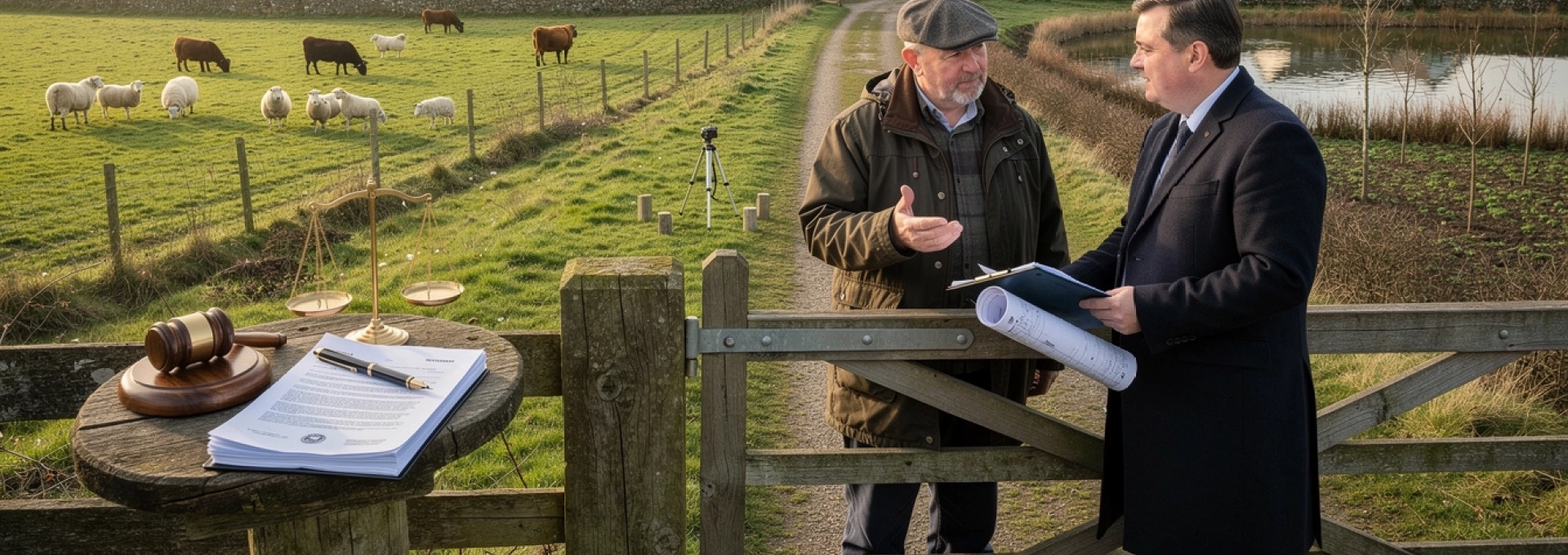
The agricultural sector represents one of the most complex legal landscapes in the United Kingdom, where traditional farming practices intersect with modern regulatory frameworks, environmental obligations, and evolving commercial structures. Agricultural lawyers serve as essential navigators through this intricate web of legislation, helping farmers, landowners, and rural businesses understand their rights and obligations while maximising opportunities for sustainable growth. The legal challenges facing today’s agricultural community extend far beyond simple land transactions, encompassing everything from subsidy compliance and environmental stewardship to succession planning and diversification strategies. With agricultural law constantly evolving in response to Brexit implications, climate change initiatives, and technological advances, professional legal guidance has become more crucial than ever for those operating in rural sectors.
Agricultural law practice areas and specialisation requirements
Agricultural law encompasses a vast spectrum of legal disciplines that require specialist knowledge and experience to navigate effectively. The complexity of this field stems from its intersection with property law, environmental regulation, tax planning, commercial law, and regulatory compliance. Agricultural lawyers must possess deep understanding of both the legal framework and the practical realities of farming operations to provide effective representation.
The agricultural legal sector demands practitioners who can bridge the gap between complex legislation and practical farming needs, ensuring clients receive advice that is both legally sound and commercially viable.
Modern agricultural practice requires legal expertise across multiple interconnected areas. Practitioners typically specialise in specific aspects while maintaining broad knowledge of related fields. This specialisation enables them to provide comprehensive advice that addresses the multifaceted nature of agricultural businesses, from day-to-day operations to long-term strategic planning.
Land tenure rights and freehold agricultural estates
Freehold agricultural estates represent the foundation of land ownership in rural Britain, providing landowners with the most comprehensive bundle of rights available under English property law. These rights include the ability to use, develop, lease, and transfer land subject to statutory restrictions and planning controls. Understanding the nuances of freehold ownership becomes particularly important when dealing with historic estates that may carry restrictive covenants, rights of way, or other encumbrances dating back centuries.
The complexity of freehold agricultural estates often involves multiple layers of historical agreements and statutory obligations that can significantly impact current land use. Agricultural lawyers must conduct thorough due diligence to identify potential restrictions, easements, and third-party rights that could affect a client’s intended use of the property. This process requires expertise in historical research, land registry interpretation, and understanding of how ancient rights translate into modern legal obligations.
Agricultural holdings act 1986 and tenancy agreements
The Agricultural Holdings Act 1986 provides substantial security of tenure for agricultural tenants, creating a framework that balances the interests of landlords and tenants while encouraging long-term agricultural investment. These tenancies, often referred to as « 1986 Act tenancies, » grant tenants significant rights including succession rights for close relatives and compensation for improvements made during the tenancy period.
Agricultural lawyers regularly advise on the complexities of 1986 Act tenancies, particularly regarding succession claims, rent reviews, and termination procedures. The Act’s provisions for statutory succession can create multi-generational tenancies that require careful management to ensure compliance with eligibility criteria and procedural requirements. Understanding these intricate succession rules proves essential for both landlords seeking to regain possession and tenants planning for future generations.
Farm business tenancies under the 1995 act
The Agricultural Tenancies Act 1995 introduced Farm Business Tenancies (FBTs) as a more flexible alternative to 1986 Act tenancies, designed to encourage new lettings by providing greater freedom for both parties. FBTs operate under commercial principles with fewer statutory restrictions, allowing landlords and tenants to negotiate terms that reflect modern agricultural practices and business requirements.
Farm Business Tenancies offer advantages in terms of flexibility and certainty, with clear termination procedures and fewer restrictions on rent levels. However, this flexibility requires careful drafting to ensure agreements adequately protect both parties’ interests. Agricultural lawyers must consider factors such as break clauses, rent review mechanisms, and repair obligations when structuring these arrangements to avoid future disputes.
Common agricultural policy compliance and subsidy claims
Post-Brexit agricultural support systems continue to evolve, requiring farmers to navigate complex
post-Brexit schemes, legacy Common Agricultural Policy (CAP) rules, and transitional arrangements. Many businesses still have to reconcile past Basic Payment Scheme (BPS) entitlements, cross-compliance breaches, and overpayments while positioning themselves for new domestic support structures. Agricultural lawyers assist clients in preparing accurate subsidy claims, managing Rural Payments Agency (RPA) inspections, and challenging penalties or refusals through formal appeal routes.
Where historical CAP schemes overlap with newer environmental and productivity grants, the risk of double-funding or ineligible claims can be high. Legal advisers help farmers interpret scheme guidance, map land parcels correctly, and document “active farmer” status and eligible agricultural activity. Careful record-keeping, supported by clear legal advice, can reduce the chance of disallowance and protect cash flow. In contentious cases, solicitors may liaise directly with the RPA or devolved agencies, instruct experts, and represent clients in arbitration or tribunal proceedings.
Environmental land management scheme legal framework
The Environmental Land Management Scheme (ELMS) is reshaping the legal landscape of agricultural support in England by linking public funding more closely to environmental outcomes. Rather than simply rewarding land ownership or production levels, ELMS focuses on “public money for public goods” such as biodiversity, soil health, water quality, and carbon sequestration. For landowners and tenants, this creates new contractual and regulatory obligations layered on top of existing agricultural and environmental law.
Agricultural lawyers play a central role in reviewing ELMS agreements, clarifying eligibility, and ensuring that scheme commitments dovetail with existing tenancy, partnership, or contract farming arrangements. Questions often arise about who can claim under ELMS where land is let, shared, or managed under multiple agreements. Solicitors help structure written agreements so that responsibilities for delivering environmental outcomes and bearing any penalties are clearly allocated. In many cases, they also review how ELMS obligations interact with conservation designations, rights of way, and planning conditions.
Because ELMS options can run for several years, long-term implications for land value, succession planning, and future development potential need careful assessment. Entering a high-level environmental scheme might, for example, restrict the scope for later housing development or intensive agricultural use. Lawyers therefore carry out a risk–benefit analysis, advising clients on which options to select, how to future-proof agreements, and how to avoid conflicting commitments under other grant schemes. This proactive approach helps ensure that environmental stewardship enhances, rather than undermines, the long‑term resilience of the farming business.
Rural property transactions and agricultural conveyancing
Rural property transactions differ significantly from standard residential or commercial conveyancing because they often involve working farms, complex title structures, and intertwined business assets. A single transaction may encompass freehold land, farmhouses, cottages, sporting rights, entitlements to support payments, and rights over private water supplies or tracks. Agricultural conveyancing solicitors must therefore combine technical property expertise with an understanding of how farms actually operate on a day‑to‑day basis.
Due diligence in rural conveyancing frequently includes reviewing farm business tenancies, grazing licences, wayleaves, and environmental agreements, as well as checking compliance with planning and building regulations. Buyers will want reassurance that there are no undisclosed occupiers with security of tenure and that any cross‑compliance or environmental breaches have been resolved. Sellers, meanwhile, must ensure that replies to enquiries are accurate and that long‑standing informal arrangements with neighbours are properly documented or disclosed. Well‑structured sale contracts can minimise the risk of post‑completion disputes and protect both parties if subsidy rules or environmental obligations change.
Agricultural property relief and inheritance tax planning
Agricultural Property Relief (APR) is a cornerstone of inheritance tax planning for farming families and rural estates. Where available, APR can reduce the value of qualifying agricultural property for inheritance tax purposes by up to 100%, making the difference between an estate that can be passed intact to the next generation and one forced to sell land to meet tax liabilities. However, the rules are detailed, and eligibility often depends on factors such as occupation, use, and the nature of the farming business.
Agricultural lawyers and private client specialists work together to review how land and buildings are held, identify qualifying assets, and structure ownership to maximise APR and, where appropriate, Business Property Relief (BPR). This may involve reorganising partnerships, updating wills, or creating trusts that balance tax efficiency with family dynamics and succession goals. For example, where a farmhouse is occupied by a retired farmer rather than an active farmer, APR may be at risk unless suitable arrangements are put in place.
Given ongoing debate about the future of rural tax reliefs and periodic reforms to inheritance tax rules, it is essential to keep succession plans under regular review. What happens if a farm diversifies heavily into non‑agricultural activities such as holiday lets or renewable energy projects? Without clear legal and tax advice, diversification can unintentionally erode APR or BPR. Lawyers help you strike the right balance between modernising the business and preserving key inheritance tax reliefs for future generations.
Compulsory purchase orders affecting farmland
Compulsory purchase orders (CPOs) can have a profound impact on agricultural holdings, whether arising from major infrastructure projects, road improvements, pipelines, or utilities. For farmers, a CPO may mean losing productive land, having fields severed, or facing long‑term disruption during construction. The legal framework allows acquiring authorities to take land without the owner’s consent, but it also provides rights to compensation and, in some cases, to challenge aspects of the acquisition.
Agricultural lawyers assist landowners from the earliest stages of a scheme, responding to notices, negotiating access arrangements for surveys, and ensuring that the full impact on the holding is properly assessed. Compensation claims can cover not only the open market value of land taken but also disturbance, injurious affection to retained land, and loss of profits. Establishing these heads of claim often requires close collaboration between solicitors, agricultural valuers, and specialist accountants.
Because CPO processes run over several years, strategic decisions must be made about investment in buildings, cropping plans, and potential relocation. Should you invest in a new milking parlour if a proposed road may cut through the steading? Legal advisers help evaluate alternative options, seek accommodation works such as new accesses or underpasses, and negotiate protective provisions in agreements with acquiring authorities. A proactive approach can significantly improve the practical and financial outcomes for affected farming businesses.
Development rights and permitted development under GPDO
The General Permitted Development Order (GPDO) grants certain development rights to agricultural landowners without the need for a full planning application, provided specified conditions are met. These “permitted development rights” can be invaluable tools for farmers wishing to erect or extend agricultural buildings, create tracks, or change the use of existing structures. However, the GPDO is detailed and technical, and misinterpreting the rules can lead to enforcement action, costly delays, or retrospective applications.
Agricultural planning solicitors analyse whether a proposed development genuinely falls within the relevant GPDO class, taking into account holding size, previous development, and time limits. They also advise on prior approval procedures, which can feel like a halfway house between permitted development and a full planning application. Is the building reasonably necessary for the purposes of agriculture on that unit? Does the scale of the development and its siting respect local amenity and landscape considerations? Clear legal advice reduces the risk that permitted development rights are inadvertently lost or exceeded.
In practice, GPDO rights can be a springboard for broader diversification and development strategies. For example, infrastructure created under agricultural permitted development may later support tourism, renewable energy, or storage enterprises, subject to further consents. Lawyers ensure that short‑term decisions about permitted development do not close off beneficial long‑term options, and that any Article 4 Directions or local restrictions are fully understood before money is spent on construction.
Agricultural mortgages corporation lending agreements
The Agricultural Mortgage Corporation (AMC) and other rural lenders provide long‑term finance tailored to the needs of farms and estates, often secured against agricultural land and buildings. AMC lending agreements can support land purchases, re‑financing, diversification projects, or generational transfers. While their products are designed with rural businesses in mind, the loan and security documents are still complex legal instruments that require careful scrutiny.
Agricultural lawyers review facility letters, mortgages, and debentures to ensure that repayment profiles, covenants, and events of default align with the client’s business plan. They also check how security interacts with existing charges, partnership structures, and tenancies, and whether third‑party consents are required. For example, where land is let on a protected agricultural tenancy, the value available as security and the lender’s remedies on default may be limited unless documentation is properly aligned.
As interest rate patterns and commodity markets fluctuate, refinancing or restructuring debt can be an important tool for maintaining business resilience. Legal advisers assist in negotiating revised terms with lenders, documenting additional security or guarantees, and ensuring that any personal liabilities are fully understood. When combined with sound financial advice, well‑negotiated lending agreements can provide the stable capital base needed for long‑term agricultural investment.
Livestock law and animal welfare compliance
Livestock law and animal welfare compliance sit at the heart of many agricultural businesses, particularly those involved in dairy, beef, sheep, and pig production. The legal framework covers everything from animal identification and movement rules to transport conditions, welfare on farm, and standards at slaughter. With increasing public scrutiny and tighter enforcement, failing to comply can result in criminal prosecution, movement restrictions, loss of assurance scheme status, and even the withdrawal of subsidies.
Agricultural solicitors advise on statutory welfare requirements under legislation such as the Animal Welfare Act 2006, associated Codes of Practice, and sector‑specific regulations. They help clients respond to inspections by local authorities, DEFRA, APHA, and assurance scheme auditors, and can assist where improvement notices or prohibition notices are issued. When allegations of neglect or poor welfare arise, early legal input is crucial to manage evidence, engage constructively with regulators, and, where necessary, defend or mitigate criminal proceedings.
Modern livestock enterprises often depend on complex contractual arrangements, including contract rearing agreements, joint ventures, and integrated supply chain contracts with processors or retailers. These documents may contain detailed welfare, biosecurity, and quality assurance obligations, sometimes going beyond statutory minimums. Lawyers ensure that such obligations are clearly worded, realistic to achieve in practice, and supported by fair allocation of risk, indemnities, and insurance provisions. In the event of disease outbreaks or production failures, a well‑drafted agreement can be the difference between a manageable setback and a protracted dispute.
Planning permission for agricultural buildings and diversification
Securing planning permission for agricultural buildings and diversification projects is now a core part of rural legal practice. Traditional farming businesses are increasingly exploring new income streams—such as storage, workshops, holiday accommodation, and renewable energy—to remain viable. Yet, local planning policies, environmental constraints, and community concerns can make the journey from idea to consent a challenging one. How do you balance the need for modern facilities with the pressures of landscape protection and neighbour amenity?
Planning solicitors and rural surveyors collaborate to prepare robust applications supported by design statements, environmental reports, and agricultural justification where necessary. They interpret local development plans and national policy to identify supportive policies and address potential objections in advance. Where planning committees or officers take an adverse view, lawyers may advise on planning appeals, enforcement notices, or lawful development certificate applications to regularise historic works. This strategic support helps ensure that capital investment in new buildings or diversified uses is underpinned by secure planning status.
Class Q permitted development rights for barn conversions
Class Q permitted development rights under the GPDO allow the change of use of certain agricultural buildings to residential dwellings, subject to various conditions and prior approval requirements. For many farmers, Class Q offers an opportunity to unlock value from redundant barns without the time and uncertainty of a full planning application. However, not all buildings qualify, and local planning authorities often scrutinise Class Q proposals closely, especially in sensitive landscapes.
Legal advisers assess whether buildings meet key criteria such as being part of an established agricultural unit, having been in agricultural use on the relevant dates, and being structurally capable of conversion without substantial rebuilding. They also guide clients through the prior approval process, addressing transport, noise, contamination, and flood risk issues. Missteps—such as carrying out substantial structural works before prior approval is granted—can lead to refusal or enforcement action, so timing and documentation are critical.
From a wider estate perspective, converting barns under Class Q can influence future agricultural operations, access routes, and the character of farmyards. Solicitors therefore consider easements, rights of way, service connections, and restrictive covenants needed to support new dwellings. They may also advise on how barn conversions affect inheritance tax reliefs, business structures, and longer‑term development strategies. The aim is to ensure that short‑term residential gains do not compromise the broader sustainability of the holding.
DEFRA building regulations for agricultural structures
While many agricultural buildings benefit from more flexible planning regimes, they are still subject to building regulations and health and safety law. DEFRA and associated agencies issue detailed guidance on the design and construction of livestock housing, slurry stores, and crop storage facilities to safeguard animal welfare, worker safety, and the environment. Failing to comply can result in enforcement action, environmental incidents, or insurance difficulties if structures fail.
Agricultural lawyers work alongside architects and engineers to ensure that proposed buildings meet relevant technical standards and that regulatory approvals are obtained where required. Areas of particular focus include fire safety, slurry and silage storage regulations, structural integrity, and measures to prevent pollution of watercourses. When grant funding or bank finance is involved, lenders and funders will often require confirmation that buildings comply with current regulatory standards and that any necessary consents are in place.
In the event of accidents, collapses, or pollution incidents linked to building defects, liability may extend across contractors, designers, and the farming business itself. Legal advisers help investigate causation, review contractual terms, and pursue or defend claims under construction contracts and professional appointments. By embedding regulatory compliance into project planning from the outset, you can reduce the risk of disputes and ensure that new agricultural structures support, rather than threaten, long‑term business resilience.
Commercial diversification planning applications
Commercial diversification has become a lifeline for many rural businesses, with projects ranging from storage and workshops to office space, food processing units, and retail outlets. However, securing planning permission for non‑agricultural uses on rural land can be more complex than it first appears, particularly where local policies prioritise protection of the countryside. How do you demonstrate that a new commercial venture will support, rather than undermine, rural character and infrastructure?
Planning and agricultural lawyers help prepare business‑led planning applications that set out clear economic benefits, such as job creation, support for local supply chains, and reuse of redundant buildings. They engage early with planning officers, parish councils, and neighbours to identify and address potential concerns on traffic, noise, and visual impact. Where necessary, conditions, Section 106 agreements, or unilateral undertakings may be used to control operating hours, access routes, or the range of goods and services offered.
From a legal perspective, diversification projects must be aligned with existing land ownership, tenancy, and financing structures. A new commercial use introduced without the agreement of a landlord, lender, or co‑owner can cause significant difficulties. Solicitors review titles, leases, and partnership agreements to ensure that necessary consents are obtained and that profit‑sharing arrangements are clearly documented. Well‑managed diversification can then provide a stable secondary income stream that strengthens, rather than distracts from, the core agricultural enterprise.
Agri-tourism development and change of use applications
Agri‑tourism—such as farm stays, glamping sites, farm shops, and visitor attractions—offers a way to bring the public onto farms and create new, experience‑based income. Yet turning a working farm into a tourism destination raises a host of legal questions. Will increased traffic and visitor numbers be acceptable in planning terms? How will health and safety, insurance, and public liability be managed in a working yard or livestock environment?
Change of use applications for agri‑tourism developments typically need to address highways impacts, parking provision, noise, lighting, and landscape effects. Agricultural solicitors work with planning consultants and designers to build a robust case that the proposal is appropriately scaled, sensitively designed, and aligned with tourism and economic development policies. Where heritage buildings or designated landscapes are involved, additional heritage or landscape and visual impact assessments may be required.
Beyond planning, agri‑tourism projects can trigger licensing requirements, new employment obligations, and consumer law considerations. Terms and conditions for guests, booking systems, and complaints procedures all need to be clear and compliant. Lawyers also help structure joint ventures and management agreements where third‑party operators run tourism activities on farm land. With the right legal framework in place, agri‑tourism can complement core farming activities and deepen public understanding of food and the countryside.
Environmental regulations and cross-compliance obligations
Environmental regulations and cross‑compliance obligations underpin many aspects of modern agricultural law, reflecting growing political and public focus on climate change, biodiversity loss, and water quality. Farmers must navigate rules on nitrate vulnerable zones, manure spreading, hedge cutting, soil protection, and pesticide use, among others. In many support schemes, from historic CAP payments to new ELMS options, failure to comply with environmental requirements can lead to significant financial penalties.
Agricultural environmental law can feel like a tangled hedgerow of overlapping regimes—statutory requirements, scheme rules, and voluntary assurance standards. Lawyers help untangle this by mapping which obligations apply to your particular holding, enterprise types, and location. They advise on record‑keeping systems, risk assessments, and policies that demonstrate proactive compliance, which can be invaluable if inspections or allegations of breaches arise. Much like a well‑designed crop rotation, robust compliance systems spread risk and strengthen overall business health.
When alleged breaches occur—for example, slurry entering a watercourse, unauthorised tree felling, or non‑compliant pesticide use—regulators may consider enforcement notices, civil penalties, or criminal prosecution. Solicitors assist in engaging constructively with the Environment Agency or local authorities, preparing responses, and negotiating proportionate outcomes. In serious cases, they will represent clients in interviews under caution and court proceedings, working with technical experts to challenge or mitigate allegations. Timely legal advice can often reduce both financial and reputational damage.
Agricultural dispute resolution and arbitration procedures
Agricultural disputes are an almost inevitable feature of rural life, arising from boundary disagreements, tenancy issues, contract farming arrangements, partnership breakdowns, or succession conflicts. Because farms and estates are frequently interwoven with family relationships and long‑standing local connections, disputes can be emotionally charged as well as commercially significant. Formal court proceedings are not always the best way to resolve such matters, particularly where ongoing relationships need to be preserved.
Specialist agricultural lawyers therefore place strong emphasis on alternative dispute resolution (ADR) methods such as mediation, expert determination, and arbitration. In many agricultural tenancy and partnership agreements, arbitration is expressly provided for, with arbitrators appointed under the Agricultural Holdings Act or by professional bodies such as the RICS. Arbitration can offer a more flexible, private, and expert forum for resolving complex valuation or management disputes compared with the courts.
Effective dispute resolution starts long before a formal process is triggered. Clear, well‑drafted agreements, accurate records, and early legal input when issues emerge can prevent misunderstandings from hardening into entrenched positions. Where formal proceedings are unavoidable, solicitors help gather evidence, instruct surveyors and accountants, and present cases in a focused, cost‑effective way. Ultimately, the goal is to reach outcomes that are fair, commercially sensible, and compatible with the long‑term sustainability of the farm or rural business.