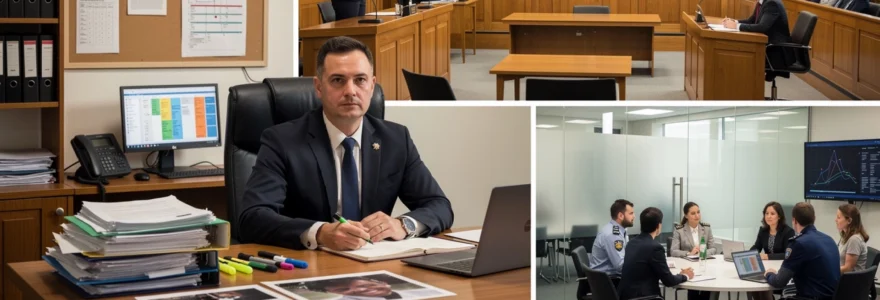
The criminal justice system depends on skilled legal professionals who navigate complex cases, balance competing interests, and pursue justice within a demanding framework. Prosecutors occupy a unique position within this system, wielding the sovereign power of the state while maintaining an unwavering commitment to fairness and the rights of the accused. From early morning case reviews to late-night consultations with police officers, the prosecutor’s day encompasses courtroom advocacy, ethical decision-making, and meticulous case management. Understanding the daily realities of this profession reveals both its considerable challenges and its profound rewards, offering insight into how justice is administered in magistrates’ courts and Crown Courts across England and Wales.
Modern prosecution work has evolved significantly, with digital case management systems, statutory disclosure obligations, and multi-agency collaboration transforming traditional practices. Prosecutors must master not only substantive criminal law but also procedural requirements, evidential standards, and the interpersonal skills necessary to work with victims, witnesses, police officers, and defence counsel. This comprehensive examination explores the multifaceted responsibilities that define a typical day for Crown Prosecution Service lawyers, from pre-dawn preparation to post-court administrative duties.
Pre-court preparation: case file review and crown prosecution service protocols
The prosecutor’s day typically begins well before the court opens its doors at 10am. This pre-court period represents a critical window for case preparation, requiring prosecutors to review digital files, assess evidential sufficiency, and formulate strategic approaches to anticipated hearings. Unlike solicitors in private practice who might focus on a handful of matters, prosecutors juggle extensive caseloads that can involve dozens of active files simultaneously. Each case demands individual attention to ensure compliance with the Code for Crown Prosecutors, which establishes the evidential and public interest tests that govern charging decisions.
Digital transformation has fundamentally altered case preparation workflows. Police forces now transmit evidence electronically, allowing prosecutors to access witness statements, forensic reports, custody records, and body-worn video footage through secure case management systems. The prosecutor app enables real-time updates during court proceedings, creating seamless information flow between courtroom and office. This technological infrastructure supports efficient case progression but requires prosecutors to develop new competencies in managing digital evidence and ensuring data integrity throughout the prosecution process.
Evaluating evidence sufficiency under the full code test
Before any case proceeds to court, prosecutors must rigorously apply the Full Code Test, which comprises two sequential stages: the evidential stage and the public interest stage. The evidential test requires prosecutors to conclude that there is sufficient evidence to provide a realistic prospect of conviction. This standard is more demanding than mere suspicion or balance of probabilities; it requires the prosecutor to assess objectively whether a properly directed jury or bench of magistrates, applying the law correctly, would be more likely than not to convict the defendant. This evaluation demands critical analysis of witness credibility, consideration of potential defences, and assessment of how evidence will withstand cross-examination.
Prosecutors must scrutinize every element of the alleged offence, ensuring that admissible evidence exists to prove each component beyond reasonable doubt. A robbery prosecution, for instance, requires evidence of theft accompanied by force or threat of force. If CCTV footage clearly shows the taking but witness testimony regarding threats is inconsistent or unreliable, the prosecutor must consider whether the evidential threshold is satisfied. This analytical process occurs repeatedly throughout the case lifecycle, not merely at the charging stage, as prosecutors continuously reassess whether the evidence remains sufficient as circumstances evolve.
Liaison with police officers and witness care units
Effective prosecution depends on collaborative relationships with investigating officers and witness support services. During the preparation phase, prosecutors frequently contact police officers to clarify investigative steps, request additional evidence, or discuss tactical considerations. These conversations might address forensic analysis timelines, identification procedures, or the feasibility of obtaining further witness statements. When cases involve vulnerable or intimidated witnesses, prosecutors coordinate with Witness Care Units to ensure appropriate special measures applications are prepared, enabling witnesses to give their best evidence through screens, video links, or other accommodations.
The quality of this multi-agency collaboration directly impacts prosecution outcomes. Prosecutors who cultivate strong working relationships with local police teams can more effectively guide investigations, ensuring that evidence gathering meets legal standards and disclosure obligations. Similarly, maintaining communication channels with victim support services allows prosecutors to keep victims informed about case progress, manage expectations regarding court procedures, and demonstrate the empathy essential to witness care. These interpersonal dimensions of prosecution work are as
integral to the prosecutor’s effectiveness as their knowledge of statute and case law; the law may provide the framework, but human cooperation and trust often determine whether cases succeed or collapse.
Drafting opening statements and examination-in-chief questions
As the court day approaches, prosecutors refine their opening statements and plan their examination-in-chief of key witnesses. An effective opening is not an argument but a roadmap, outlining for magistrates or a jury what the case is about, the sequence of events, and the evidence they can expect to hear. Prosecutors must distil often complex fact patterns into clear, chronological narratives that remain faithful to the evidence and avoid improper comment on matters yet to be proved.
Preparation for examination-in-chief is equally meticulous. Prosecutors draft topic-based question plans rather than rigid scripts, ensuring that witnesses give their own evidence in their own words while covering each element of the offence. They must anticipate areas of potential difficulty—such as previous inconsistent accounts or traumatic subject matter—and structure their questioning to minimise confusion and re‑traumatisation. The goal is to elicit “best evidence” without leading on disputed facts, striking a careful balance between gentle guidance and strict adherence to the rules of evidence.
In practice, this means reviewing each witness statement alongside other materials—CCTV, forensic results, call data records—to identify gaps or contradictions that may need to be clarified. Where vulnerable witnesses are involved, prosecutors work with intermediaries and Witness Care Units to ensure that questioning style, pace, and language are adapted appropriately. The preparation done at this stage can be the difference between a coherent, persuasive account and a fragmented narrative that leaves reasonable doubt.
Reviewing unused material and disclosure obligations under CPIA 1996
Disclosure is one of the most demanding and time‑consuming aspects of modern prosecution work. Under the Criminal Procedure and Investigations Act 1996 (CPIA) and the Attorney General’s Guidelines on Disclosure, prosecutors must review unused material—items the police have gathered but do not intend to rely upon—and decide whether anything meets the test for disclosure to the defence. This duty is ongoing and continues throughout the life of the case, requiring constant vigilance and systematic record‑keeping.
Unused material can include anything from officer’s notebooks and CCTV from nearby premises, to social media downloads and third‑party records. Prosecutors must assess whether each item might reasonably undermine the prosecution case or assist the defence. In complex or high‑volume investigations, such as multi‑handed drug conspiracies or serious sexual offences, this exercise can involve thousands of pages of material. The task is not simply administrative; it demands analytical judgment, familiarity with legal thresholds, and an appreciation of how small details may assume significance at trial.
To manage this workload fairly and efficiently, prosecutors work closely with disclosure officers to ensure that schedules are properly compiled, accurately describing the material held. Where potential disclosure issues arise—such as sensitive material relating to informants or national security—prosecutors may need to seek public interest immunity rulings or consider whether the case can still proceed fairly. The overarching principle is clear: a prosecutor’s duty is not to secure a conviction at all costs, but to ensure that the defendant receives a fair trial, even where that means disclosing material that weakens the Crown’s case.
Morning court appearances: magistrates’ court hearings and bail applications
By the time the court list begins at 10am, much of the prosecutor’s thinking has already been done. Morning hearings in the magistrates’ court are typically fast‑paced and varied, with the prosecutor dealing with a mixture of first appearances, remand applications, case management hearings, and trials. The magistrates’ court is often described as the “workhorse” of the criminal justice system, handling hundreds of thousands of cases each year across England and Wales, and prosecutors must move quickly from one matter to the next while maintaining accuracy and composure.
In this environment, the ability to think on one’s feet is essential. Files may arrive late, defendants may change their pleas at the last minute, and witnesses can fail to attend. Prosecutors must make rapid decisions about adjournments, acceptable pleas, and charging amendments, all while applying the Code for Crown Prosecutors and relevant statutory frameworks. Digital case management tools assist, but the core of the role remains professional judgment exercised in real time before the court.
Presenting summary offences and either-way matters
Many morning hearings involve summary offences—such as common assault, driving offences, or public order matters—that can only be tried in the magistrates’ court. Prosecutors outline the facts succinctly, drawing the court’s attention to any aggravating or mitigating features that may affect sentence. Where defendants plead guilty, the prosecutor’s role shifts quickly from proving the case to assisting the bench with a fair and proportionate sentencing exercise, often by referencing relevant Sentencing Council guidelines.
Either‑way offences, such as theft or ABH, add an extra layer of complexity. Prosecutors must be ready to summarise the prosecution case for the purposes of allocation and mode of trial decisions, highlighting factors relevant to whether a case is suitable for summary trial or should be sent to the Crown Court. This requires a firm grasp of maximum sentencing powers, guideline ranges, and any issues of complexity or public importance that may justify allocation to a higher court. The prosecutor must present these factors objectively, recognising that the decision ultimately rests with the magistrates and, in some cases, the defendant.
Because the list is often long and the courtroom busy, the prosecutor’s advocacy must be focused and efficient. Over‑elaboration risks delaying the list; under‑explanation may leave the court without the material it needs. Developing the judgment to pitch submissions at the right level is a key part of becoming an effective court‑based prosecutor.
Opposing bail under the bail act 1976 exceptions
Bail applications are a prominent feature of morning remand courts and a core part of a prosecutor’s daily life. The starting point under the Bail Act 1976 is that defendants should be granted bail, but prosecutors may seek to oppose it where specific exceptions apply—typically risks of failing to surrender, committing further offences, or interfering with witnesses. In domestic abuse, stalking, or serious violence cases, these assessments can be finely balanced, with public protection and victims’ safety weighing heavily in the analysis.
To oppose bail effectively, prosecutors must marshal the available information: previous convictions, history of non‑compliance with court orders, the seriousness of the alleged offence, and any intelligence from police officers about ongoing risks. They then present structured submissions, addressing each relevant statutory exception and explaining why the presumption in favour of bail is displaced. Like a doctor weighing symptoms and risk factors before prescribing treatment, the prosecutor must interpret a mixture of hard data and professional judgment to recommend an appropriate course.
Alternative to outright opposition, prosecutors may propose conditional bail—such as residence requirements, exclusion zones, curfews, or non‑contact conditions—to manage specific risks. Where victims have expressed particular fears, prosecutors should draw these to the court’s attention, ensuring their voices are heard without compromising the fairness of the process. When the court’s decision differs from the prosecutor’s position, they must accept the outcome and, where appropriate, consider whether a bail appeal is justified under the statutory framework.
Mode of trial hearings and allocation decisions
For either‑way offences, the mode of trial hearing is a crucial procedural stage that can shape the entire trajectory of a case. The prosecutor first outlines the facts and any aggravating features, assisting the court in deciding whether its sentencing powers are sufficient. Factors such as the alleged use of weapons, the vulnerability of victims, or the presence of racial or religious aggravation may tip the balance towards sending the case to the Crown Court.
The magistrates must decide whether the case is suitable for summary trial, and if so, the defendant is given the option to elect trial in the Crown Court. Prosecutors do not “forum shop” for tactical advantage but instead make submissions rooted in sentencing powers, case complexity, and the interests of justice. For instance, an assault causing actual bodily harm with limited injuries and no significant previous convictions might remain in the magistrates’ court, while a similar offence involving sustained, group violence might properly be sent up.
These decisions require the prosecutor to take a holistic view of the case at an early stage, often before full disclosure and expert evidence are available. The ability to foresee potential trial issues—such as legal argument over joint enterprise or the need for complex forensic evidence—helps ensure that cases are allocated to the court best equipped to handle them. Getting allocation right can significantly improve case efficiency and trial readiness later down the line.
Managing first appearances and plea before venue procedures
At first appearances, prosecutors present the basic outline of the case, confirm the charges, and address issues of bail, legal representation, and timetabling. For indictable‑only offences, such as robbery or serious sexual offences, the procedure is largely administrative: the charge is put, no plea is taken, and the case is sent directly to the Crown Court. Nonetheless, prosecutors must be prepared to address interim matters such as reporting restrictions or special measures applications at an early stage.
For adults facing either‑way offences, the plea before venue process requires defendants to enter a plea in the magistrates’ court after hearing a summary of the facts. Prosecutors must present that summary clearly but neutrally, ensuring the defendant and court understand the essence of the allegation without straying into commentary. Where a guilty plea is entered and the case is suitable for summary sentence, the prosecutor will then assist the bench with relevant guideline ranges, aggravating and mitigating factors, and any statutory surcharges or ancillary orders.
Where a not guilty plea is entered, the focus shifts rapidly to case management. Prosecutors engage with defence representatives to identify the real issues in dispute, agree admissions where possible, and set realistic directions for disclosure and witness attendance. Effective early case management can significantly reduce delay and avoid unnecessary stress for victims and witnesses, reinforcing the prosecutor’s role as a guardian of efficient and fair process.
Crown court trial advocacy: examination and cross-examination techniques
While many prosecutors spend a significant proportion of their time in the magistrates’ court, Crown Court trials remain one of the most demanding and high‑profile aspects of the role. Here, indictable‑only and the more serious either‑way offences are tried before a judge and jury, and the prosecutor’s advocacy skills are placed under intense scrutiny. Trials often involve complex evidence, intricate legal argument, and emotional subject matter, requiring prosecutors to combine legal expertise with resilience and clear communication.
The rhythm of a Crown Court trial is very different from the rapid‑fire pace of a magistrates’ list. Days—or even weeks—may be devoted to a single case, with the prosecutor living and breathing the evidence. From opening the case to the jury to examining witnesses, handling objections, and making closing submissions, each stage requires careful planning and the flexibility to adapt to unexpected developments in the witness box.
Presenting complex indictable offences to juries
Serious offences such as conspiracy to supply Class A drugs, fraud, or grievous bodily harm often involve intricate fact patterns and technical evidence. The prosecutor’s challenge is to turn this complexity into a coherent story that a lay jury can understand without oversimplifying or misrepresenting the evidence. This is where strong narrative skills come to the fore: facts must be organised chronologically or thematically, and legal concepts translated into everyday language.
Effective prosecutors avoid jargon where possible, explaining, for example, that “joint enterprise” means acting together towards a shared goal, or that “conspiracy” is an agreement to commit a crime rather than the crime itself. Analogies can be powerful tools: comparing a criminal network to the structure of a legitimate business, with managers, couriers, and accountants, can help jurors grasp roles within an organised crime group. Throughout, the prosecutor must remain scrupulously fair, avoiding emotional manipulation while still conveying the seriousness of the alleged conduct.
Visual aids—such as timelines, phone attribution charts, or maps—are increasingly used to help juries follow complex evidence, particularly in cases involving digital data or multiple defendants. Prosecutors must ensure that any such aids accurately reflect the evidence and are disclosed in advance to the defence. The aim is not to overwhelm jurors with information, but to equip them to perform their constitutional role: weighing the evidence and reaching a verdict based only on what they have heard in court.
Cross-examining defence witnesses under browne v dunn principles
While prosecutors primarily conduct examination‑in‑chief of Crown witnesses, they must also be adept at cross‑examining defence witnesses, including the defendant. The common law principle from Browne v Dunn requires that if a party intends to challenge a witness’s credibility or dispute a key part of their account, those points must be put to the witness in cross‑examination. For prosecutors, this means they cannot hold back criticisms for closing speeches; they must give witnesses the opportunity to respond to the case against them.
Practically, this involves careful planning: identifying the propositions the prosecution will invite the jury to accept, and ensuring each is fairly put to the witness. A prosecutor might, for example, confront a defendant with inconsistencies between their trial evidence and earlier interviews, or highlight objective evidence—such as cell site data or ANPR records—that contradicts their alibi. The style of questioning must be firm but controlled; the prosecutor’s task is to test the evidence, not to browbeat or humiliate.
Cross‑examination also calls for quick thinking. Witnesses may give unexpected answers or introduce new details, requiring the prosecutor to adjust their line of questioning in real time. Like a chess player thinking several moves ahead, an experienced advocate anticipates possible responses and plans contingencies, while remaining alert to matters that may require follow‑up disclosure or legal advice once the witness has finished.
Handling expert witness testimony in forensic cases
Modern prosecutions frequently rely on expert evidence: DNA profiling, toxicology, collision reconstruction, digital forensics, and more. Prosecutors must be able to understand the essence of these disciplines well enough to present the evidence clearly and to test it where necessary. They are not expected to become scientists or engineers, but they do need to grasp key concepts such as statistical likelihood ratios or margin of error so that they can explain them to the court.
In examination‑in‑chief of experts, prosecutors guide the witness through their qualifications, methodology, findings, and conclusions, ensuring that the jury understands what the expert did and, crucially, the limits of their evidence. For instance, a DNA expert might explain that a profile provides strong support for the proposition that the defendant touched an item, but cannot say when or in what circumstances that contact occurred. Clarifying these limits avoids overstating the probative value of forensic evidence.
When the defence calls its own experts or seeks to challenge the prosecution’s science, prosecutors must be prepared to cross‑examine on methodology, assumptions, and alternative explanations. This can involve comparing expert reports, probing potential biases, or highlighting where an expert has gone beyond their area of competence. Working collaboratively with case‑building officers and, where appropriate, independent scientific advisers helps ensure that complex forensic evidence is presented and challenged fairly.
Responding to section 78 PACE exclusion applications
During Crown Court trials, defence teams may apply under section 78 of the Police and Criminal Evidence Act 1984 (PACE) to exclude prosecution evidence on the grounds that its admission would have such an adverse effect on the fairness of the proceedings that it ought not to be admitted. Common examples include disputed confessions, identification evidence obtained in questionable circumstances, or material seized following alleged breaches of police powers. For prosecutors, these applications can be pivotal: the exclusion of a key confession or piece of forensic evidence may significantly weaken—or even fatally undermine—the case.
Responding effectively requires prosecutors to master both the factual background and the applicable law. They may need to call police officers or other witnesses to give evidence on a voir dire (a trial within a trial) about how interviews were conducted or how searches were carried out. The prosecutor then makes submissions on why, even if there were technical breaches, the evidence remains reliable and its admission would not compromise overall fairness. The court must balance the interests of justice, weighing the seriousness of any misconduct against the value of the evidence.
From a broader perspective, section 78 PACE embodies the prosecutor’s dual role: to present the Crown’s case robustly while upholding the integrity of the criminal justice system. Prosecutors must be candid about weaknesses in how evidence was obtained and, where appropriate, concede that exclusion is justified. In doing so, they reinforce public confidence that prosecutions are conducted lawfully and that convictions rest on solid foundations.
Afternoon case conferences: multi-agency collaboration and victim engagement
Once the morning’s court list or trial sessions conclude, many prosecutors turn to case conferences—structured meetings with police officers, counsel, victims, and sometimes other agencies. These sessions are crucial for progressing complex or sensitive cases, resolving outstanding issues, and ensuring that all parties understand the strategy moving forward. In serious violence, exploitation, or domestic abuse cases, multi‑agency conferences can include probation, social services, or safeguarding teams, reflecting the broader social context in which criminal offending occurs.
Victim engagement is a key thread running through these meetings. Prosecutors may explain charging decisions, discuss the likely course of proceedings, or outline what giving evidence will involve. When decisions are made not to charge, to discontinue, or to accept a lesser plea, prosecutors have a duty under the Victims’ Code to communicate clearly and respectfully, offering opportunities for review where appropriate. These conversations can be some of the most challenging parts of the job, requiring empathy, transparency, and the ability to manage expectations while bound by evidential tests and legal constraints.
Case conferences also provide space to consider ancillary matters: restraining orders, Criminal Behaviour Orders, applications for compensation, or referrals to specialist support services. By drawing together information from different agencies, prosecutors can identify patterns of risk and tailor their approach accordingly. In this sense, prosecution work goes beyond individual cases; it contributes to wider efforts to protect communities, reduce reoffending, and support those affected by crime.
Sentencing submissions and appeals: navigating the sentencing council guidelines
Whether in the magistrates’ court or Crown Court, sentencing hearings are a regular feature of the prosecutor’s day. When a defendant pleads guilty or is found guilty after trial, the prosecutor assists the court in reaching a sentence that is lawful, proportionate, and consistent with Sentencing Council guidelines. This involves drawing attention to relevant aggravating and mitigating factors, previous convictions, statutory minimums or maximums, and any required ancillary orders such as disqualification, forfeiture, or notification requirements.
Prosecutors do not advocate for a particular figure in the way that defence advocates might. Instead, they guide the court through the applicable guideline, indicating the category of harm and culpability and suggesting a broad range within which the court may wish to operate. For example, in a domestic burglary case, the prosecutor may submit that the presence of occupants, high‑value goods, or targeting of vulnerable victims justifies a higher category. The judge or magistrates remain responsible for the final decision, but they rely on accurate, balanced submissions from counsel on both sides.
Appeal work forms another important, if less visible, part of prosecution practice. Where sentences appear unduly lenient for serious indictable offences, prosecutors may be asked to consider whether the case should be referred to the Court of Appeal by the Law Officers under the Unduly Lenient Sentence scheme. Conversely, they may respond to defence appeals against conviction or sentence, drafting skeleton arguments and appearing before appellate courts. These proceedings require a more reflective, research‑based approach, with prosecutors analysing precedent, policy, and proportionality to support their positions.
Post-court administrative duties: case management system updates and CPS direct consultations
Even after the courtroom lights dim and the public gallery empties, the prosecutor’s work is rarely finished. The late afternoon and early evening are often devoted to administrative tasks that are essential to maintaining the integrity and efficiency of the prosecution service. Chief among these is updating the digital case management system with accurate endorsements of what has occurred in court: outcomes, adjournments, bail conditions, and any directions made by the judge or magistrates. These records form the backbone of ongoing case management, allowing colleagues, managers, and partner agencies to understand the current status at a glance.
Prosecutors also use this time to draft follow‑up instructions to the police, set disclosure tasks, and prepare for upcoming hearings. Letters to victims explaining key decisions, responses to defence correspondence, and internal emails seeking charging advice or policy guidance all vie for attention. Time management becomes critical; without disciplined organisation, it would be easy for important actions to slip through the net, potentially jeopardising trials or undermining confidence in the process.
For many, the day does not end when they leave the office. CPS Direct and similar out‑of‑hours services ensure that prosecutors are available around the clock to provide urgent charging advice, particularly in “red charge” situations where suspects are in custody and statutory time limits apply. Prosecutors on rota may receive late‑night calls from officers seeking guidance on appropriate charges, bail conditions, or evidential requirements. These rapid consultations demand clear thinking under pressure: with limited time and incomplete information, prosecutors must apply the Full Code Test, consider public protection, and give legally sound advice that will shape the very first steps of the case.
By the time the prosecutor finally closes their laptop, they may have moved through a dozen distinct roles in a single day: advocate, legal adviser, case manager, negotiator, and, above all, guardian of fairness in the criminal justice system. It is a demanding career, but for those committed to public service and the pursuit of justice, the variety and impact of this daily work offer a professional life that is both challenging and deeply rewarding.